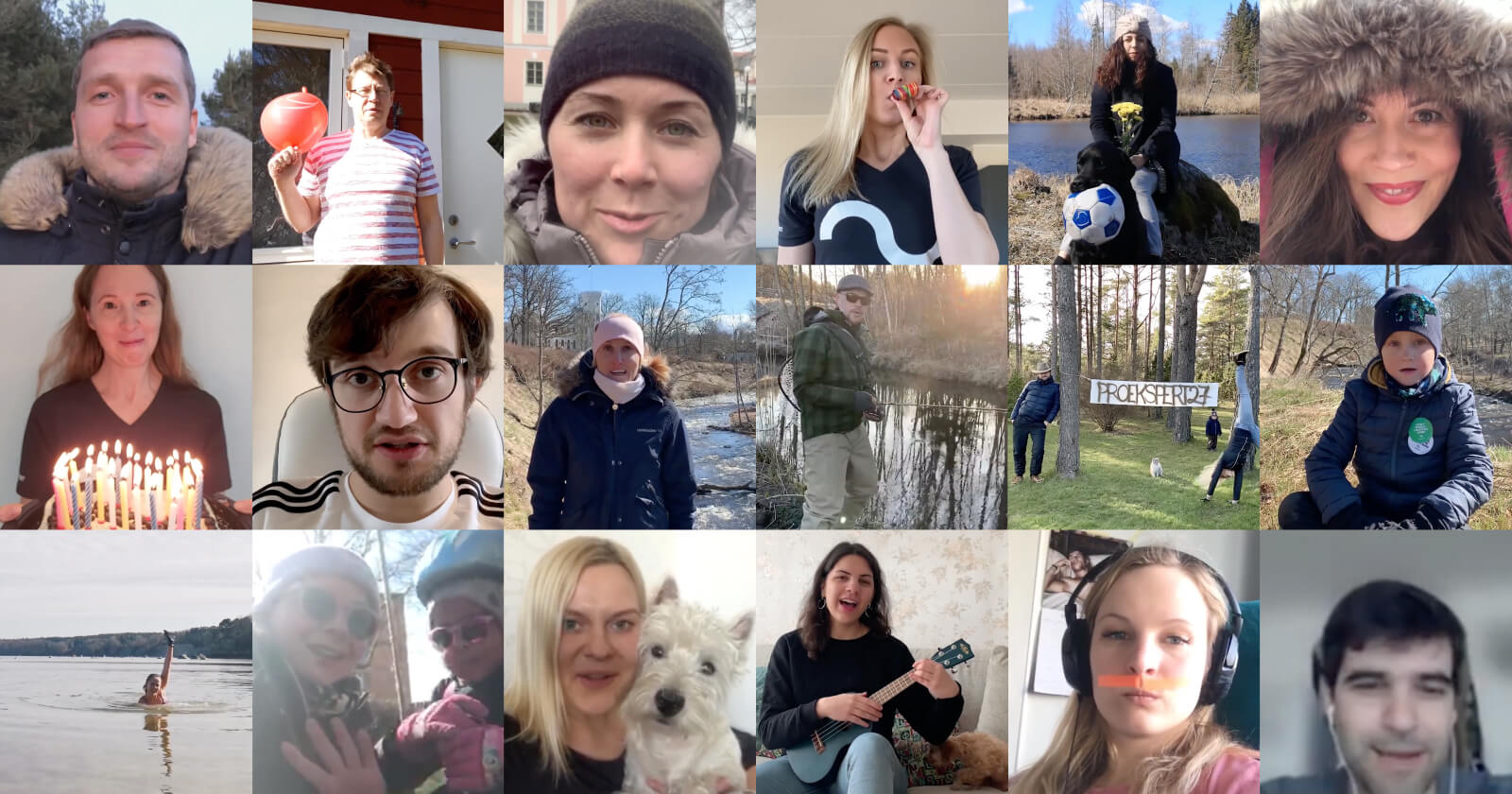
Celebrating Proekspert’s 27th birthday

Happy birthday to Proekspert – now 27 years old!

This year we’d planned to gather employees, partners, and customers to plant 1,200 trees we bought through the Koosloodus foundation at Christmas time. But since it’s not possible at the moment, we’ll wait for calmer times.

We still want to thank our employees, customers, and partners who have been a part of our journey. We would not be what we are today without all of you who’ve influenced and shaped us. Here’s to many more birthday celebrations in the years to come!

Proekspert remote work diary: week 3

The third week of our company-wide remote work is complete. Every week presents its challenges and takeaways.

Our employees were asked to answer a few questions about their third week’s experience of company-wide remote work. This week we are focusing on the idea of physical isolation from colleagues and its effects. Find out how our company keeps a sense of community during company-wide remote work.

Set up calls for chit-chat unrelated to work

Self-isolation and remote work, especially the company-wide variety, leaves no room for “water cooler” talk in the kitchen and corridors. Regular chit-chat with your colleagues is an important part of every work environment. However, while working remotely, conversations often go straight to the point. To preserve the company culture we’ve worked so hard for, we are actually encouraging chit-chat!

There are many ways to establish communication with your team while working remotely. However, teams must think of a strategy that best suits them and allows them to connect. Every team dynamic is different, and finding a way to connect on matters unrelated to work is important.

In Proekspert, we have a separate channel for online coffee breaks. Some teams are doing it themselves, as well, though in smaller groups. I admit, at first it might be awkward, and perhaps a bit forced, but by the end of the meeting the team always wants to do it again.

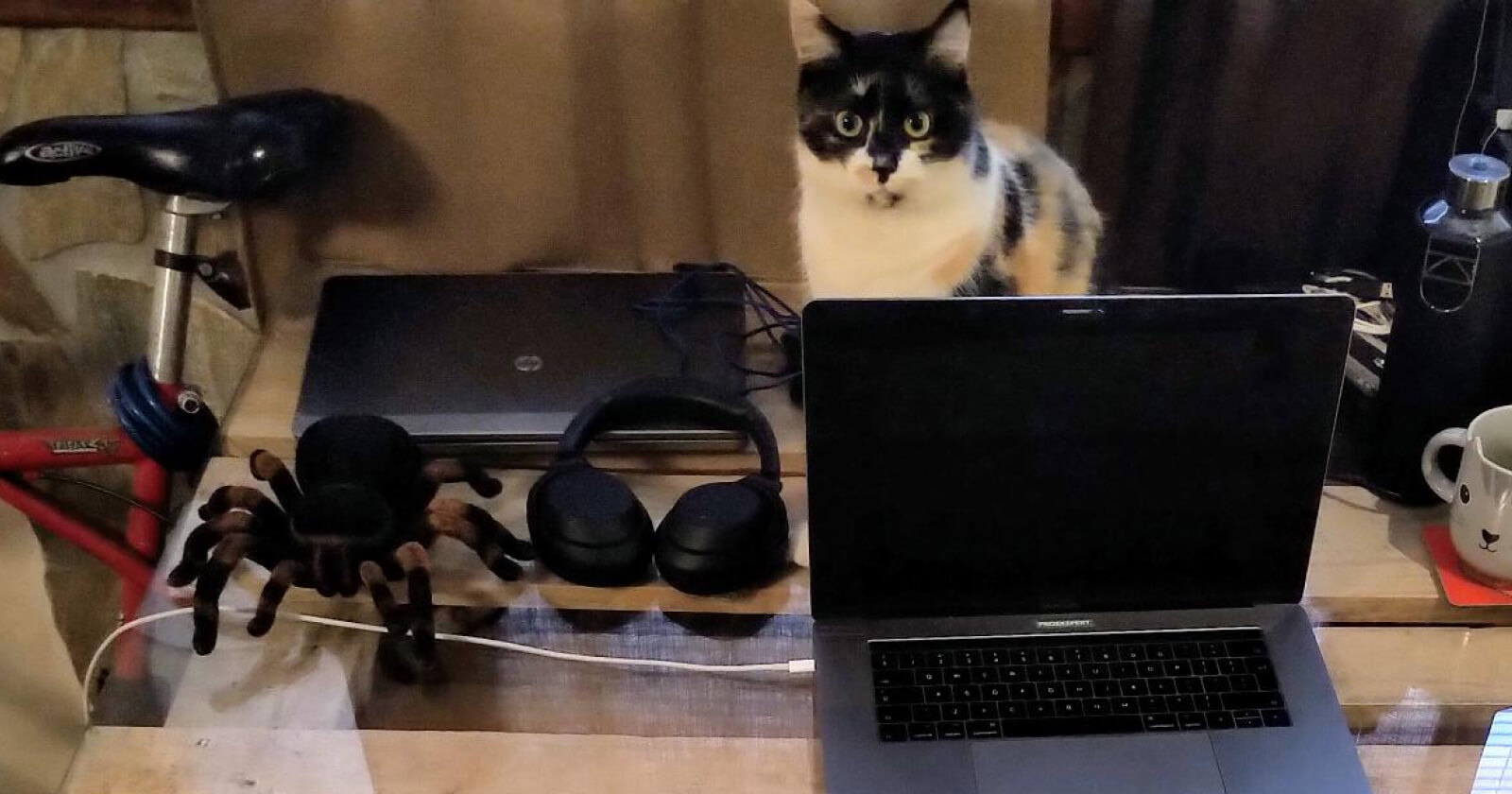
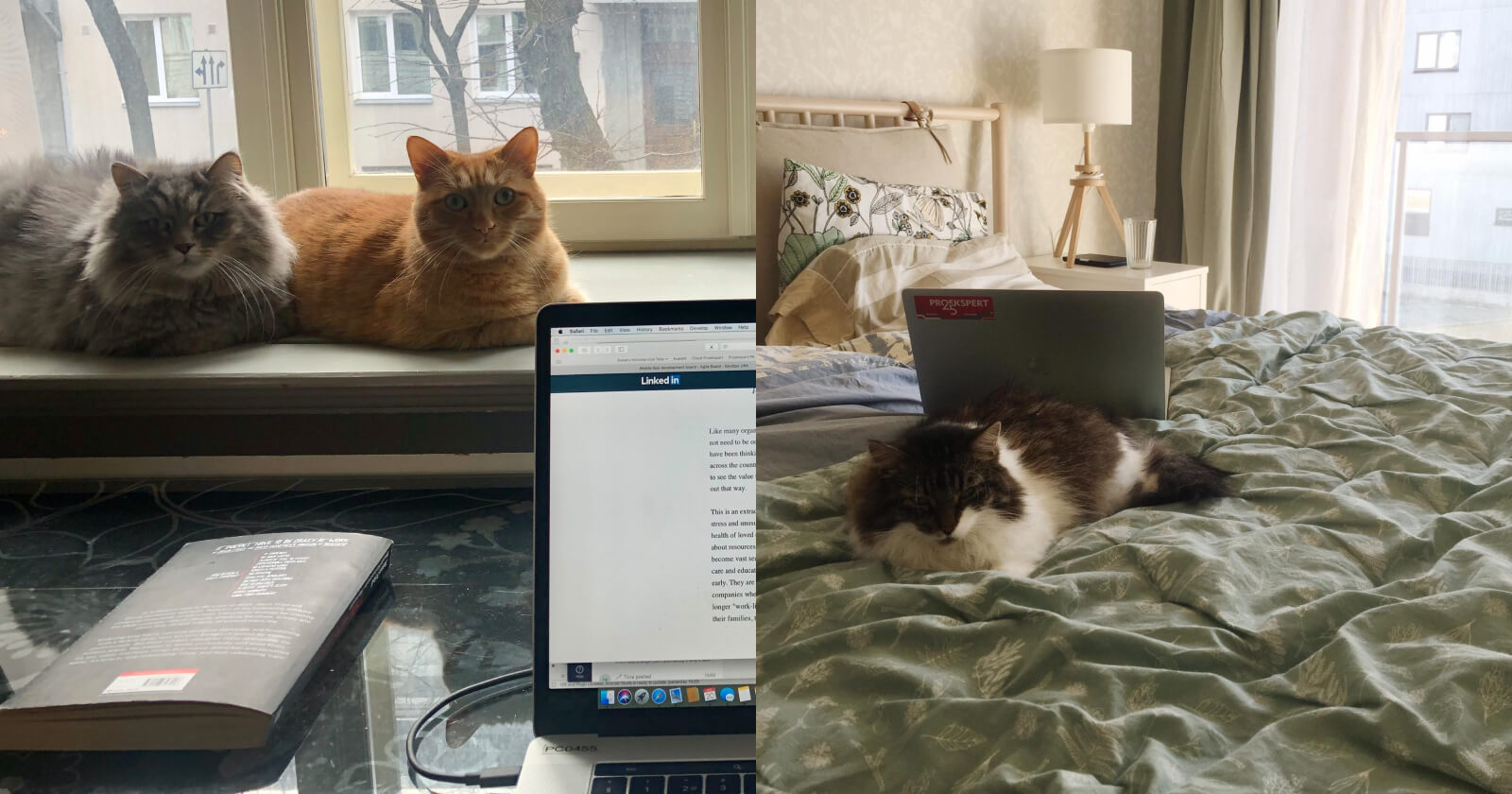
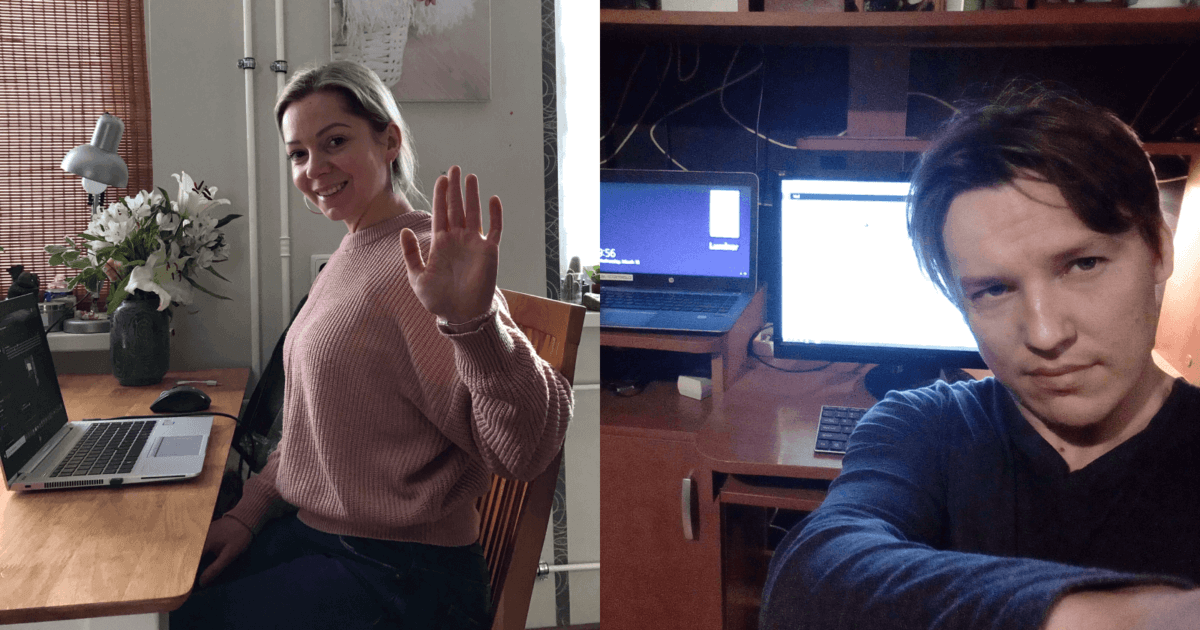
We have also set up a remote work channel where people can discuss their issues, share tips, and ask for advice. We share pictures, too, because it helps boost the sense of community. We share pictures of our work setups, animals, kids, and food. It always lifts our mood.

Tiina, Chief Culture Officer

We have morning coffee with our teams each morning for random ramblings, like we used to have in the office kitchen. And we have a Friday evening chillout 🙂

Urmas, Business Development

We have coffee via MS Teams once a week and chat about life.

Marko, Parent, Teacher, Cook, Cleaner, and Software Developer

We begin our weekly meetings by measuring everyone’s temperature to see how each and every one of us is doing — seriously! We take part in our company’s organized coffee-corner talks, and challenge each other in our physical activity competition. Outside of work, I have so many projects: building a chicken coop, getting my hands dirty in the garden, playing spy games with my kids, shopping online… oh, so much to do :). I also go on dates with my husband by attending online live concerts. We also plan to go to the Louvre this Saturday.

Liis, HR Lead

Set up company-wide strategies that allow employees to connect

Sharing daily experiences online may be less natural for some than others. Thus, such practices need to be promoted and encouraged on a company level. People need to be given a direction to move.

At Proekspert, we’ve set up special channels focusing on remote work activities. HR is keeping up the engagement with a weekly questionnaire to see how everyone is doing. Further actions are taken based on information gathered from these questionnaires. 

We encourage employees to have cameras on during group calls. It really does make a difference and allows us to better connect when you can see a person’s movements, facial expressions, and reactions. 

Also, we have a weekly all-hands meeting where important updates are shared. 

In-house, our employees have taken the initiative to organize events themselves. We have a book club and game nights that are a great success and help us stay connected.

Tiina, Chief Culture Officer

I feel that we are even more efficient and organized during meetings now. I’ve noticed much more discipline lately.

Urmas, Business Development

We try to use cameras whenever possible. For me, personally, it makes a huge difference whether you see a face or not.

Kadri, Agile and People Coach

From a work-related point of view, everything proceeds as usual, no activities are canceled or changed, we have stand-ups, demos, sprint plannings, refinings, and discussions. The work goes as planned.

Denis, Software Developer

Join online forums, discussions, communities, etc.

Having a sense of community united by a single idea is paramount to one’s mental health. Many miss social gatherings and public events while being in self-isolation.

In Proekspert, we are surfing the web and searching for interesting opportunities for leisure time for our employees. We have set up a special page where employees can share websites they are using in their free time: platforms with online courses, some interesting hackathons, workouts, etc. 

A great idea is to start your own interest group. Some are organizing coding challenges and problem-solving sessions.

In my yoga community, we created a Facebook page. On a daily basis, we share what we’re doing and how we’re doing. We have a nice group of people who support each other, people who have a similar system of values. A group united by a common purpose is very comforting. You see great examples of others and get motivation and inspiration.

Tiina, Chief Culture Officer

Self-isolation doesn’t mean you can’t gather with friends. We have some virtual wine dates and even virtually celebrated a birthday.

The more video, the better 🙂 I’ve found the Zoom gallery view works ideally for larger crowds, as you can see everyone’s face on the same screen.

Liis, HR Lead

I am using a lot of Instagram Live classes to work out. Some gyms have pages with their live classes, and there are chat groups where people push each other to move!

Helen, Accountant

Work-related events are mostly happening in teams. I’m really happy that social/private life routines are slowly coming back (yoga in Zoom, exercising in the My Fitness netfit channel, jogging with a friend over Skype).

Kadri, Agile and People Coach
The third week of our company-wide remote work is complete.

I don’t mind isolation, if only it were in quiet conditions – and with kids, that’s hard to get. I’ve turned one room into a playground for the kids so that they stay there most of the day. Since playgrounds are closed, I’ve even turned a lot of furniture upside down so that the kids can climb and jump off the furniture (onto a bed). Be creative and improvise!

Marko, Parent, Teacher, Cook, Cleaner, Software Developer

I have a 3D printer, experience using it, and can share my knowledge. In my free time, I follow 3D printing on Reddit. Also,  I’m into photography and like learning more from others and sharing my own experience. I follow Reddit photography-related communities and the TalTech photography club.

Denis, Software Developer

About Proekspert remote work diaries

Since many people around the world are bringing their work home to slow the spread of COVID-19, to keep our spirits up this diary aims to share and gain insight from each other’s experiences. Every week is new and different. 

Here, you can explore our company-wide remote work experience by weeks.

Also, check out the Spotify playlist of songs that help our employees stay productive!

Proekspert remote work diary: week 2

The second week of our company-wide remote work is complete. Whether you live alone or with someone, this experience presents its own challenges and takeaways.

Remote work is not new for our employees and has been commonly practiced in Proekspert for many years already. However, remote work in times of a national state of emergency in connection with the coronavirus pandemic differs in nature.

Our employees were asked to answer a few questions about their second week’s experience of company-wide remote work. If you’re still struggling to adapt, try some of the tips we’ve accumulated from our in-house experience, and perhaps some will work for you.

Proekspert remote work diary. Cat and setup

Be realistic when planning your day

Sometimes we may be too optimistic and not realistically assess how much time certain tasks and distractions will take. We cannot plan our day assuming that we will have eight hours of uninterrupted work, while in reality, we keep getting distracted by other commitments or unexpected scenarios. This results in a great deal of anxiety, as we fail to execute our planned tasks on time. This, in turn, results in unmet expectations for both you and your team.

To avoid this, plan realistically, counting the time you need to dedicate to your loved ones throughout your day.

In the morning, you have to plan your daily meals for the next week. Otherwise, it may happen that you’ll budget one hour for lunch only to discover that you don’t have anything to eat. It takes more time to prepare.

Plan your day, but also plan everything outside of work: when you’ll homeschool your kids, play with your dog, meditate, etc.

Give yourself time to get used to the situation. See what works best for you. Accept the situation as normal: it’s okay to temporarily be chaotic and be unproductive. We are all getting used to being at home all the time, doing everything at home, so take your time. If something doesn’t work, then experiment with it. Be flexible.

Tiina, Chief Culture Officer; and Liis, HR Lead

Sometimes my lunch takes longer because I have to cook, so I cook a lot of food to avoid having to cook everyday.

Sírius, iOS Developer
Proekspert remote work diary. Food

My day is iterations of sleep, work, eat, work, workout, work, eat and sleep.

Mariam, Software Engineer

Communicate with your team and your family

Transparency with all parties is important. It’s important to communicate, set priorities, establish boundaries both with your team and with your loved ones. Take time to understand the norms of being effective working from home, and at home. Speak up and don’t assume that what worked in a different reality can and will continue working now. Invent new ways to preserve old routines.

If you don’t live alone, divide chores and obligations so that one person is not doing everything. If you have kids, plan their day and communicate the plan to them. Experiment and find what is best for you. If the kids are able, let them plan their day themselves. It’s a great opportunity for them to learn how to be in charge of their own time.

Tiina, Chief Culture Officer and Liis, HR Lead

My team has its daily standup meeting daily at 10 a.m. Our communication is pretty good through Slack. Since my whole family is in Brazil, I use Whatsapp as usual to contact them, and I keep scaring them with bad news, hoping that they’ll stay inside.

Sírius, iOS Developer
Proekspert remote work diary. Setup

Microsoft Teams is good. The funny thing is that this quarantine has made me realize that I have been isolating myself for years.

Mariam, Software Engineer

I speak with my network every day. We not only share what’s going on at work but also talk on other topics. Sharing your thoughts, good and bad things, helps to keep up the good vibes. We share our thoughts and worries and talk about what we did during the day at dinner time with family, as has always been our practice.

Liis, HR Lead

I’ve always wanted to use my home office for work more often, but I was afraid that people would think I’m lazy or something. Now I can do it without any guilt. There are huge benefits for me: more time to sleep, less money spent on gasoline, less water consumption (no need to shower every day), more flexible hours, more time to be with family.

Marko, ETL Developer
Proekspert remote work diary. VR

I’ve started to feel the effects of home office life, and need to work harder on my motivation to get moving. On an ideal day, I try to do some online training (one of my dance teachers does a class online and many gyms do the same). After work, we go walking and do geocaching with my daughter. I’m starting to miss people a lot, so we make a lot of video calls right now.

Helen, Accountant
Proekspert remote work diary. Family

Take care of yourself

We now play many roles in very limited physical space. We shouldn’t forget the role of being ourselves. Taking the time to treat yourself, unwind and just be by yourself is essential to maintain your mental and physical health, which correlates to how effective and efficient you are in all your other roles. Play the role of being yourself first, and all the other ones will follow.

Be kind to yourself and remain flexible. Have honest discussions. If another adult is present, ask them to take the kids while you practice self-care. Taking time for yourself is a basic human need and right. If you’re feeling guilty, just remind yourself that you are you. Everything eventually gets done. If things are not getting done, maybe you are doing too much.

Run, walk, or get yourself out of the house. Be alone away from home. If you have a garden, get out there and get your hands dirty.

It’s obligatory for kids to go outside if possible. It eases anxiety. Take a walk in nature. The more stressed and anxious you are, the more stressed your kids will be.

Tiina, Chief Culture Officer and Liis, HR Lead

I drink a lot of water, so very often I’m going to the kitchen to fill my water bottle (and to the bathroom). That helps me stretch a bit and not sit the whole day in front of the computer – and hopefully I avoid new kidney stones.

Sírius, iOS Developer

I ordered new blankets and pillows and sheets for the bed. Also, to keep sane I try to work out every day and go for a walk in the park with the dog. I also found some great lectures on the web from major universities, so now when work frustrates me I can listen to lectures. The best quarantine buddy to have is a dog!

Mariam, Software Engineer
Proekspert remote work diary. Dogs

Walk in the mornings and evenings. Have at least one physical training per day — it’s amazing how many cool classes are offered online for free at the moment. Take time only for yourself to do mindfulness practices, appreciate the moment, and be friends with yourself.

Liis, HR Lead

Cleaning your hands when going outside and coming in is always important, but it’s especially so now.

Marko, ETL Developer

Read more:
Proekspert remote work diary: week 1

Proekspert remote work diary: week 1

Since many people around the world are bringing their work home to slow the spread of COVID-19, it’s a chance for us to share and gain insight from each other’s experiences.

Remote work is not new for our employees and has been commonly practiced in Proekspert for many years already. However, remote work in times of a national state of emergency in connection with the coronavirus pandemic differs in nature and brings new challenges, as well as valuable takeaways.

Our employees were asked to answer a series of questions about their current remote work experience. Read below about the reality of bringing work home.

Most helpful adjustment tools for the first week of remote work

Everyone’s experience of remote work is different. It’s totally understandable that during the first week, especially when not used to working remotely while all family members are also at home, your efficiency and the team’s efficiency will drop. However, some will find that working remotely helps boost their efficiency significantly. Here is what helped our employees to effectively adjust to remote work. Perhaps some of these tips will help you too.

I’ve set up a daily routine for me and my kids. For example, my workday starts at exactly 9 a.m. But before I get to my workplace, I go to the kitchen, have a coffee, and chat a few minutes with my husband. It’s just like in the office, except the hubby part 🙂
Also, noise-canceling headphones are the best!

Liis, HR Lead

Having a separate room for working greatly helps. My work laptop always stays in that room.

Oskar, Business Development

It helps to know that everyone else is in the same position, and reading this kind of remote diary is very helpful.

Marko, Software Developer

My coffee maker helps a lot.

Stepan, Software Engineer

I brought my chair and monitor from the office just a night before it all started. Having a proper table is also important.

Mikk, Android/iOS Developer

Take breaks! While working from home, the difference between home and work will begin to fade. But you still need to take lunch breaks and go out into the fresh air! I also think it’s very important, especially now, to have video calls with your colleagues and get some virtual human interaction. We’ve agreed with some colleagues that we’ll still do video calls, even if it’s just chatting via video! Keep up that human interaction that you won’t be getting anymore live from the coffee corner! 😉

Helen, Accountant

Schedule your calls and tasks; make a clear work plan. That’s what brings structure to my day.

Piruza, Business Development

Keep the routine that you had for your usual office days. Make a plan for what you want to accomplish during the day. Stay away from media and social media as much as possible.

Anneli, Process Value Offering

The main challenges of company-wide remote work

It doesn’t matter how experienced you are with working remotely and self-management. Remote work during a pandemic is challenging in its own way and can put you in many unfamiliar situations. Our homes, family sizes, locations, internet connections, and access to digital tools may differ. Communication (with the team and within the company) is the key to keeping a healthy balance. Here are some of the challenges our employees faced during the first week of company-wide remote work. 

The combination of cooking four times a day, homeschooling my daughter, a bad internet connection, and unexpectedly broken digital tools have presented some challenges. I was expecting to have more time, but actually the opposite has happened. However, I’ll carry this insight into the next week and learn from it. We need to be agile and adapt 🙂

Piruza, Business Development

In addition to my full-time role at work, I play many roles at the same time: cook, mom, teacher, and wife.

Liis, HR Lead

Our challenge was finding separate work spaces for me and my wife, because before we had only the kitchen table.

Kaupo, Software Engineer

My young toy poodle requires a great deal of attention and distracts me most while working from home.

Jana, Analyst/PO

Sometimes, it is such a challenge to stay inside when the weather is so inviting and alluring to go outside.

Merily, Software Engineer

Isolation from colleagues, a lack of a commute, and the absence of context switching between work and non-work makes it hard to stay focused and motivated at times.

Stepan, Software Engineer

Over-communicating is a problem. Maybe it’s just an issue in this first week, as people suddenly find themselves isolated and are reaching out to be connected.

Anneli, Process Value Offering

I’m trying to maintain a work-life balance. I’ve started to miss the motivating atmosphere, as well as the people we have in the office. This makes me feel somewhat disconnected at times 🙂 

Oskar, Business Development

Sometimes, I feel like I’m in a bubble. In the office, information about projects and tasks moves naturally. We have daily stand-ups, which give a nice overview, but usually I know most of the things that are going to be said during the stand-up. But now, working remotely, almost everything is new.

Karl, Software Developer

Valuable remote work discoveries

Remote work, even in these forced circumstances, can present its own opportunities. Seek positivity and view it as a chance to do things at home that you normally do not have time, freedom, or motivation for. Let’s see what some of our employees have discovered during this first week of working remotely.

You can sleep longer, no need to wake up early to clean up and drive to the office. I’ve had stand-ups while still in bed!

Marko, Software Developer

Thanks to self-isolation, my friends and I had our first “everyone is at home” remote tabletop roleplaying session in roll20.net, and I must say it was much more comfortable than the previous “one person (me) online, and everyone else physically together in another place” system.

Stepan, Software Engineer

French press coffee does not actually taste too bad.

Mikk, Android/iOS Developer

I found some extra motivation to continue with my home improvements.

Kaupo, Software Engineer

Working from home gives a good opportunity to do some face procedures and take a break to fix the toilet 🙂

Merily, Software Engineer

Concerning COVID-19: Proekspert’s commitment to society, clients and partners

As the novel coronavirus outbreak deepens, we wanted to let you know that we are focused on the safety of our employees and ensuring our clients and partners are well supported through this time.  

To uphold our social responsibility to slow the spread of COVID-19, we have decided to implement a work-from-home policy across all of our four offices. We are taking this additional step in light of the ongoing pandemic to keep our employees safe and to be able to continue working as usual – wherever our employees are located. We are also reducing in-person meetings and restricting non-critical travel. 

As a company serving international clients, we have worked as a distributed team for many years. This ensures that being separated from our teammates does not impact our ability to deliver projects to which we’ve committed. 

We are committed to serving our clients throughout this period and beyond. Please reach out to your Proekspert representative if you have specific concerns or questions. 

We urge you all to look after yourselves, your families, colleagues, and friends.  

Stay healthy! 
Proekspert 

Celebrating our Proekspert female employees with “Women’s Day – Every Day”

To celebrate women’s achievements in the social, economic, cultural, and political spheres, Proekspert decided to make a series of videos called “Women’s day – Every day.

In 1977, the UN and its member states proclaimed March 8th to be an official day to recognize women’s rights and world peace. Since then, most countries have celebrated it every year, some making it a national holiday.

We believe in the importance of raising awareness and talking about the great achievements of women.

Proekspert men recite facts about women who made notable achievements in history

Proekspert’s male employees were asked to recite some facts about women who’ve made notable achievements in a variety of fields throughout history. The facts were chosen at random and were presented in no particular order. 

Proekspert men answer questions about their female colleagues. Part 1.

More than 30% of Proekspert employees are women. In light of Women’s Day celebrations, we asked our male employees to answer some questions about their female colleagues.

In the first part of the questionnaire our men were asked: 

  • How would they describe women working in Proekspert?
  • What have they learned from working with women in Proekspert?

Proekspert men answer questions about their female colleagues. Part 2.

It is crucial to recognize the importance of contributions women have made to the sustainable development of Proekspert.

In the second part of the questionnaire our men were asked:

  • What do they like most about Proekspert women?
  • What would Proekspert look like if there were no women working here?

Wishes from Proekspert men to women all around the world

We concluded this year’s “Women’s Day – Every Day” video series by sharing what our Proekspert men wished for women all around the world on International Women’s Day.

Although our “Women’s Day – Every Day” videos may only have an online presence, we try to live by these principles every day while offline at Proekspert. Every employee, regardless of gender, is a part of a whole, and every individual’s actions, behaviors, and mindsets have a significant impact on our continuous development.

Our people inspire us. We are always happy to find a reason to celebrate them both online and offline!

On behalf of all our employees, Proekspert wishes a Happy Women’s EVERYday!

Peeter Meos: Globetrotting for operations research

Peeter Meos is a man of knowledge, experience, and wisdom. Already when sitting opposite him, one can sense the warm energy he emits.

Peeter’s personality and attitude have been shaped by his diverse history – born and raised in Estonia, he earned degrees from the United States Air Force Academy and Georgia Tech. He served as a NATO officer for 6 years, and joined the Proekspert family in 2017.

A profession that makes existing things better

Operations research might not be something people who seemingly do not have close contact with this area, think about often. However, according to Peeter whose specialty it is, the results of his work can be found everywhere from creating a perfect coffee blend recipe to making the NATO generals agree on their funding priorities.

“Operations research takes the best parts of mathematics, computer science, and economics, lumps them all together, and then tries to apply it to practical problems,” says Peeter. Working as a Senior Scientist in the NATO Communications and Information Agency, he was faced with a challenge: make a group of very authoritative people agree on a common and highest priority. Twenty generals needed to agree which of 20 to 30 factors was the single most important for the organization. Peeter and his team came up with a solution in order to avoid the usual result of the general with the loudest voice winning.

“The generals taking part in the exercise were asked to independently rank priorities not just from one to 20, but they also had to compare items Y and X, Z and Y pairwise, individually, and then decide which was more important,” says Peeter. “Finally, we took these preferences, put them into a mathematical model that spit out the combination of the line items that differed least from individual rankings, generating the combination that people were least dissatisfied with.”

Across the pond

Peeter’s journey to operations research started accidentally. Even though he was versed in maths and physics, his initial desire was to become an Air Force pilot. After starting his studies in Tallinna Tehnikaülikool (now TalTech University), he noticed a newspaper ad from the United States Department of Defense that invited those with knowledge of sciences and English to apply to the US Air Force Academy. He was accepted without ado, packed his bags, threw a farewell party for his friends and family, and flew to the other side of the ocean.

During his first weeks in the academy, he was taken on excursions and introduced to life in the US. During one session there was a heavy cargo pilot who asked the cadets if they had heard about operations research (he had not) and defined it as a combination of math and computer science. Since he knew both of these subjects well, he decided to give it a shot. He graduated cum laude and never regretted his choice.

Still, flying was the push that made him consider Air Force Academy in the first place.

“It is a serene thing that once you are in the air, you are detached from the mundane troubles of the world. I think it’s a bit of escapism, as well. Also, when you’re doing military flying you have that half-percent probability that you’ll get to do something tactical, but usually that doesn’t happen. Mostly it’s like riding a bicycle – you push the stick forward and the trees get bigger, pull back and the trees get smaller.”

Besides learning how to fly and solve problems by combining math and IT, Peeter also experienced life in a completely different environment. “A lot of things obviously weren’t like in Estonia, but I suppose I expected them to be different. Probably the hardest thing, that I wasn’t at all prepared for, was the really outspoken religiousness in rural America.” Every foreign student was assigned to a sponsor family and, of course, as is the custom of practicing Christians, a prayer was said before every meal.

“The first time I had no idea what was going on,” explains Peeter. “I was observing the others, and suddenly they all joined hands and started saying thanks to the Lord. I was like, ‘Okay, I can do that!’“ It was quite an experience to experience how the church culture, which we don’t see much in Estonia, is really embedded in the American culture.

Education with a philosophy for life

During his Air Force Academy days, Peeter established his core beliefs. The first one is brought to mind by his cadet sabre: “We will not lie, steal or cheat nor tolerate among us anyone who does,” he quotes. Peeter has developed an absolute allergy against dishonesty, which helps him when decisions become complicated.

The second principle he lives by comes from the philosopher Immanuel Kant’s concept of the categorical imperative. “Treat people like you’d like yourself to be treated, and treat them as ends themselves, not a means to an end,” Peeter paraphrases. “In other words, don’t use people.” Peeter claims these two simple beliefs help to solve most of the problems, Peeter claims. In addition, he likes the motto of the 1960s racing driver, engineer and team manager, Colin Chapman, which is “Simplify and add lightness.”

“Just take away the unnecessary parts, and then it works as it should,” says Peeter.  “It’s optimal. That’s what operations research also goes for – optimality.”

Having traveled a decent amount, seen many different cultures, and learned what matters most in life, Peeter thinks living abroad has made him much more tolerant towards others. “When you go around the world, it doesn’t matter where, you see that on a very human level people are the same. Therefore, the same values and the same basic criteria apply.”

Peeter encourages people to go and explore other countries, as he believes it helps one become a better person. He says it often takes distance to realize how great life in Estonia actually is. Consequently, Peeter’s journey has led him back to where he started from – Estonia – but as a much more of an enlightened person than he was when he left.

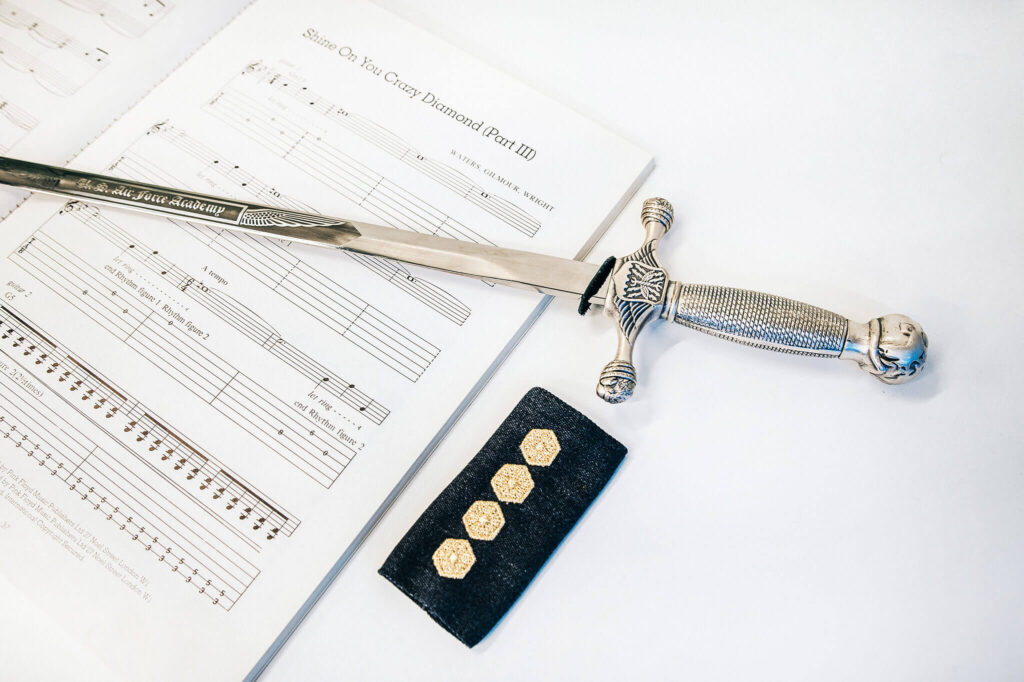
3 items that characterize Peeter as a person

  • Pink Floyd songbook – music is really important for Peeter as he sees similarities in it with maths – they’re both patterns. During the end of his high school years, progressive rock had a great influence on his musical taste.
  • Cadet sabre – as mentioned earlier, it reminds him of one of the principles he lives by, “We will not lie, steal or cheat nor tolerate among us anyone who does.”
  • Estonian Air Force Captain shoulder boards – his best friends are still in the military, so this item reminds him of the strong friendships and sense of identity, “Once you’re an officer, you’re always an officer.”
     

What they said:
“Peeter is a man of many talents. He can play several musical instruments and quickly learn new languages. He can suit up and impress Fortune 500 CEOs and then change into his red sneakers and drive his Mini Cooper to a beach for a kite surf session. And he’s the only guy I know who thought that flying fighter jets was boring and concentrated his studies on something more interesting – applied mathematics!”

Tanel

Top 5 pitch mistakes to avoid at startup events

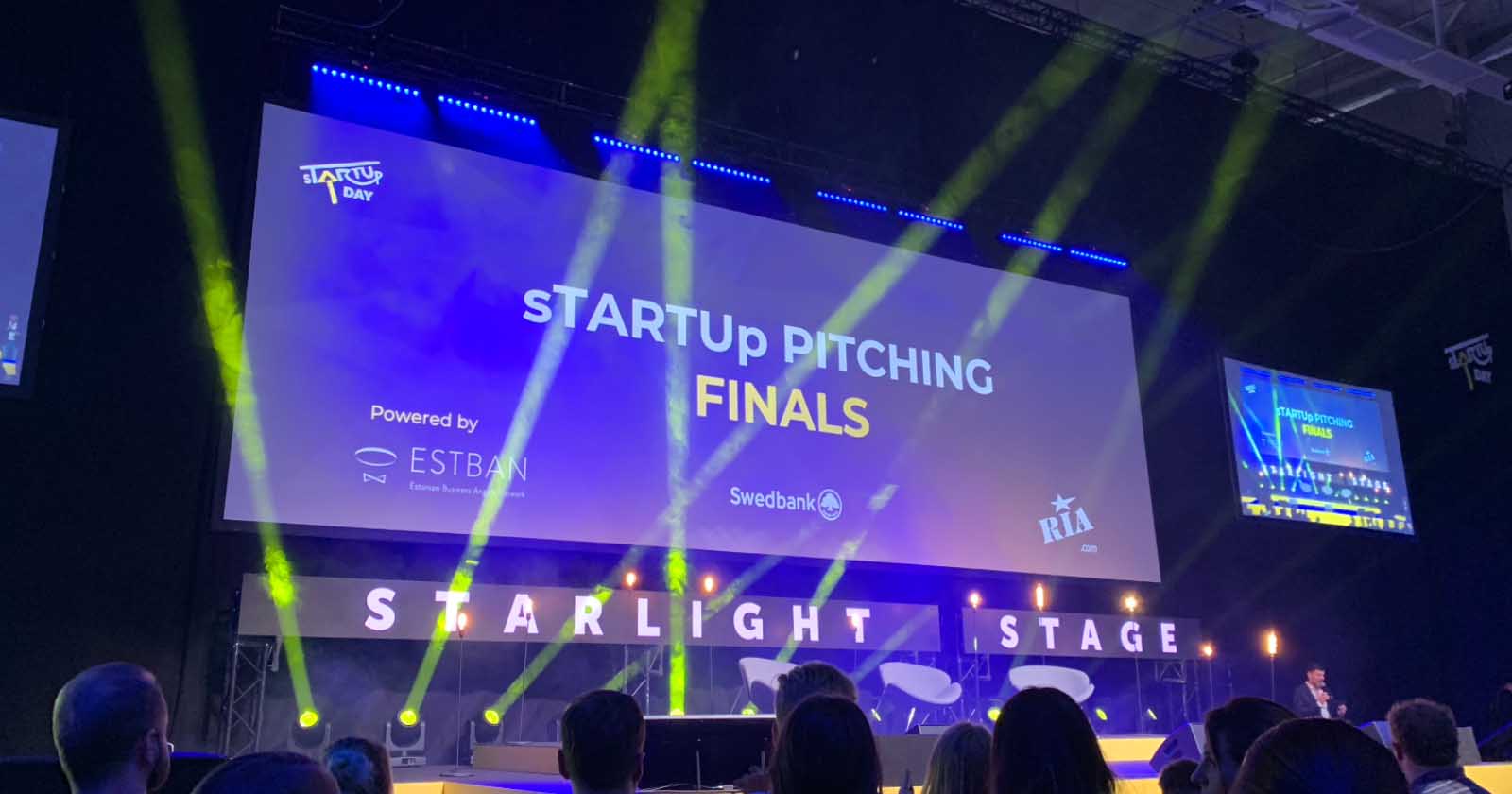
sTARTUp Day 2020 last week featured some truly inspiring technology that convinced us that the future of the startup ecosystem in Estonia and the world looks very bright.

It was great to see so many new initiatives at sTARTUp Day 2020. As part of the event, emerging startups had an opportunity to present their ideas to potential investors and win significant prizes.

Proekspert is ready to support and invest in innovative initiatives and talent, which is why we keep a close eye on events like this. However, we’ve noticed repeating patterns among some pitchers. Hence, we decided to share the top pitch mistakes that we identified during the event. Perhaps this will help startups be more successful in their search for customers and investors.

These are some of the most frequently-occurring pitch mistakes we noticed during sTARTUp Day 2020.

Top 5 pitch mistakes at Tartu Startup Days

1. The pitch doesn’t stand out.

Most of the pitches presented at the startup days were structured very similarly. Since the technology is exciting, the presentation of it should be as well. Stand out. Don’t follow a template. Tailor the pitch to your product and/or service. Yes, there are things you need to cover in your pitch, regardless of the nature of the product and/or service, but how are you different? The way in which you address the obvious questions should be unique to you.

2. Too complicated

Some explanations of the products and their technology were too advanced for everyone in the audience. Make it simpler. Make it minimal and very understandable. Experience shows people don’t trust what they don’t understand. They’re scared of it. Take into consideration whom you’re pitching, and make sure you communicate your message clearly.

3. Lack of focus on customer and business value

Many startups could only present wishful thinking with no tangible evidence backing up their ideas. Be precise. Give us numbers, predictions, and proof that your solution works and is needed. In a pitch, you have very little time to showcase and explain something you have been working on for an extended period of time. To you and your team, it is understandable that the solution is important, useful and profitable, given your attachment to it. But the audience doesn’t have the benefit of your background, so proving the relevance, need, and profitability of your idea is critical.

4. Introduction of the teams and the co-founders was too formal.

Startups are about passion. You work in small teams, and all of you are hopefully driven by a single idea. The way you refer and introduce your co-founder matters. Saying that your co-founder is your friend first, before introducing him/her as the CTO/CFO/CEO, etc., really wins hearts and shows yours is truly a partnership that goes beyond you buying the most expensive specialist on the market to secure investments.

5. The person pitching didn’t suit the role.

In the end, it comes down to you and the way you present your idea. This is what makes you win. We seek human connection and when we can empathize with the person pitching, we establish trust with you and your company. Choose carefully the person to pitch your product and/or service. They should have charisma, excellent knowledge of the product and/or service, and be good at public speaking.

Proekspert finalist for Dream Employer 2020

We are honored to be named one of the six finalists for the award, Dream Employer 2020.

We at Proekspert believe it’s not only important to seem like the best employer but to actually be the best employer. 

“Proekspert makes sure our structure and culture contribute to the personal and professional development of our employees,” says Proekspert’s HR Lead Liis Paemurru. “Our people inspire us. We want to be better for and with them!”

This is the seventh Dream Employer competition. It is presented by the Estonian Marketing Institute in co-operation with CV-Keskus and leading human resources specialists.

How to choose the right digital transformation partner

It’s true that digitally transforming your business can drastically change your product or service by exploring new ways of identifying the business challenge, elevating customer interaction and speeding up market validation. However, as with any other commitment, the key to success in digital business and enterprise digital transformation is your chosen partner.

Digital business transformation

Digital transformation is the single most used buzzword in business right now.  Everyone is urging you to jump on board the DT ship and sail to the land of profit, product potential, and increased customer satisfaction.

However, the right digital transformation partner you choose is the key to success in digital business transformation, as with any other commitment. In a world of great marketers and beautiful stories, it is extremely hard to see beyond the promises and determine the best fit for your company. 

I have worked in business development for most of my professional life, interacting with clients and businesses from various sectors and industries. The projects I’ve worked on include making a more intelligent and accurate thermostat, producing a more personable cruise experience, increasing the speed and ensuring the security of financial transactions, or building a coffee machine that could perform its own maintenance. These cases involved more than 30 stakeholders, a geographically scattered development team, and extremely strict business limitations.

Very often, we take over cases that previous partners failed to deliver. Most failing initiatives have one thing in common – the mismatch of product development partners involved. It is not because of a lack of companies offering the needed services and digital expertise – it’s because validating the most suitable organizations to partner with is challenging.

This article will help you find the best digital transformation partner for your projects and initiatives.

You

Every great partnership starts with YOU!

Take your time to understand what you want to do clearly.

What are the main challenges?

Identify the digital transformation project setup and define your business goals and needs.

Do you need to:

  • Develop a connected product portfolio?
  • Apply data analytics for internal process optimization?
  • Build a long-term digital roadmap? 
  • Validate current pain points and find ways to solve them?
  • Speed up the product development process?
  • Increase customer satisfaction? 
  • Strengthen your market position? 
  • Fly to sunny Tallinn to meet with Proekspert?

There’s only one reason to meet with a potential partner before the need is identified: when you’ve turned to a high-level business consultancy with the intent to figure out where to go and what to do. However, if you intend for the meeting to start cooperation and transformation from “somewhere, somehow,” then the meeting will be a waste of time and money for both parties.

Once you know what you want, it is time to address the “whys” and “hows”?

Why exactly do you need a digital transformation consultant?

Define your priorities.

It is very important to assess your in-house potential: be aware of what digital transformation expertise you already have in your company and what kind of partnership you need.

  • Do you lack skills?
  • Do you need a team extension? 
  • Do you want to accelerate your time to market?

Only in this way can you find the best fit with a partner. Every situation is different. If you want to extend your team, you need to search for companies with a compatible working culture and skill and technology stack together. If you outsource an entire team to compensate for missing skills, you can select a company that works very differently from yours. If you aim to find a strategic partner for sustainable growth, finding an organization with strong business domain knowledge is as important as your partner’s relevant tech stack capability, thus giving you a competitive advantage.

Getting to know your partner is also an investment. In my experience, companies consider product development costs because they are the most obvious costs and are routinely calculated. However, additional considerations are potential costs related to time and money invested to establish, test, and develop the partnership. These are critical for long-term cooperation and sometimes get overlooked or underestimated.

Constant communication

It is important to ask questions and clearly communicate your needs and expectations. Aligning customer expectations at the beginning will ensure a positive customer experience. Remember that both of you want the partnership to benefit one another, so you must be fully aligned.

Ask your potential partner to walk you through the onboarding process as if you were already a customer. This will give you a clear perspective on how your partner works and whether it corresponds to your vision.

Ask how the partner views the alignment and synchronization process. The process should be documented, at least in an email. A reliable partner should list their detailed objectives like:

  • Agreeing on the business digital transformation project’s level of involvement and responsibility for both sides.
  • If there are conflicting time zones, discuss how the partner will tackle that issue.
  • Ask questions about the product development process and the availability of teams.

Some technology companies might have team CVs, which might accelerate your process significantly. A partner with a standing team ready to take over is your way of beating your competitors with a faster, ready-to-market product. If there are no available teams, look for a concrete and realistic time period within which one can be assembled and ready to work.

Although these questions seem very secondary, addressing them early on will make the partner validation process much more efficient. Don’t figure it out on the go. Any potential partner who suggests doing it on the fly may cause you to get stuck in the endless loop of “figuring things out” before moving on to tangible progress.

Approaching enterprise digital transformation

How your potential digital transformation partner approaches the digital transformation journey is crucial – it’s about mindset. A step-by-step approach consisting of short outlined iterations based on your strategic business priorities works best. Start with the most critical problem to be solved, even if it has nothing to do with what is commonly considered “digital transformation.”

Transformation involves many shapes and forms; don’t get stuck on tech. Maybe there are significant operational problems preventing you from successfully undertaking digital transformation. Solve those first. Digital transformation is not about tech, it is not about trends – it is about you, your business challenges, and goals. 

References

Everyone requires and pays attention to references. But make sure you are looking at the right things.

PPay attention to personal references, not only marketing-generated case studies. Doing business is personal. Transforming your product or service is even more personal. 

You want to work with companies that deliver and are pleasant. The digital transformation process is full of risks and stress, so make sure you go through it with an empathetic company that sees more than a business and focuses on people and customers.

Red flags

Red flags are visible early on.

Take note that if people present at the negotiations are not the ones who will handle the partnership, This could lead to future complications in strategic alignment and a major loss of time and money. 

“Too fast – too big.” Look out for huge commitments early on from both sides. There should always be an opportunity to test the partnership first. Take time to evaluate your work together. This will reduce the risk of committing to the “wrong” partnership and losing your market position due to major delays and inadequate investment.

Avoid long-term milestones. Build your cooperation so visible developments will be within two to three months. Otherwise, you become vulnerable to moving in the wrong direction and spending too much time and money on a product or development that will not add value to your business operations.

Don’t let yourself be too dependent on your partner. Have an exit strategy.

First meeting with the right digital transformation partner

The first meeting with your digital transformation consultant is often underrated. To get the most out of it:

  • Meet face to face. Take time to meet with the potential partner/client personally.
  • Discuss the key points of the partnership, address the main concerns, and share your expectations.
  • Involve as many stakeholders in decision-making power as possible.

Half of the above-mentioned ideas involve you, and half concern the commitments of your business partner. A partnership goes both ways; it has to be balanced. If you choose thoroughly and communicate clearly, the probability of a win-win outcome is significantly higher. Once the relationship reaches a point of a fruitful partnership, you can contribute to the further development of your partner by exploring other ways you can be useful to one another. If something works already, why not learn and develop further together? A great way to show your recognition of the work is by giving your personal reference as a strong sign of your satisfaction, which might help your digital transformation partner to leverage their business further.

Ultimately, your digital transformation consultant will become an ideal partner that most businesses will envy and seek to employ as part of their transformation strategy.

The most important thing about successful digital transformation is to start by partnering with digital transformation consultants with a proven track record in digital technology (particularly emerging technologies), innovative tools, and a business culture that promotes a deeper understanding of your business goals.

What do you most look for and pay attention to when choosing a change management partner?