Deep Learning: Training the Technology of the Future

A talk by Sayan Pathak, Principal ML Scientist at Microsoft, at North Star AI conference, powered by Proekspert.

This year’s North Star AI conference in Tallinn invited industry rockstars to present the latest and most radical developments of the field. Among the featured speakers was Sayan Pathak, Principal Machine Learning Scientist at Microsoft, who gave a thorough overview of how the company is utilizing deep learning (DL). Moreover, Pathak ended his speech by encouraging developers to take initiative and join in the effort to build this technology of the future.

Deep learning and neural networks

Neural networks are not new, began Pathak. While the technology itself has been around for some time—and many have had big hopes for it—the fact is that we have not been able to train neural nets well enough to do the things that we would like them to do, let alone to have their own minds (as many AI enthusiasts might hope).

Pathak assured his audience that the process of training these systems is not simple and requires a lot of work. That said, in the last few years we have witnessed several innovations that have enabled neural networks to take their first baby steps to meeting their greater potential. This is the era when we may actually see this technology come to fruition.
The Landscape of Machine Learning

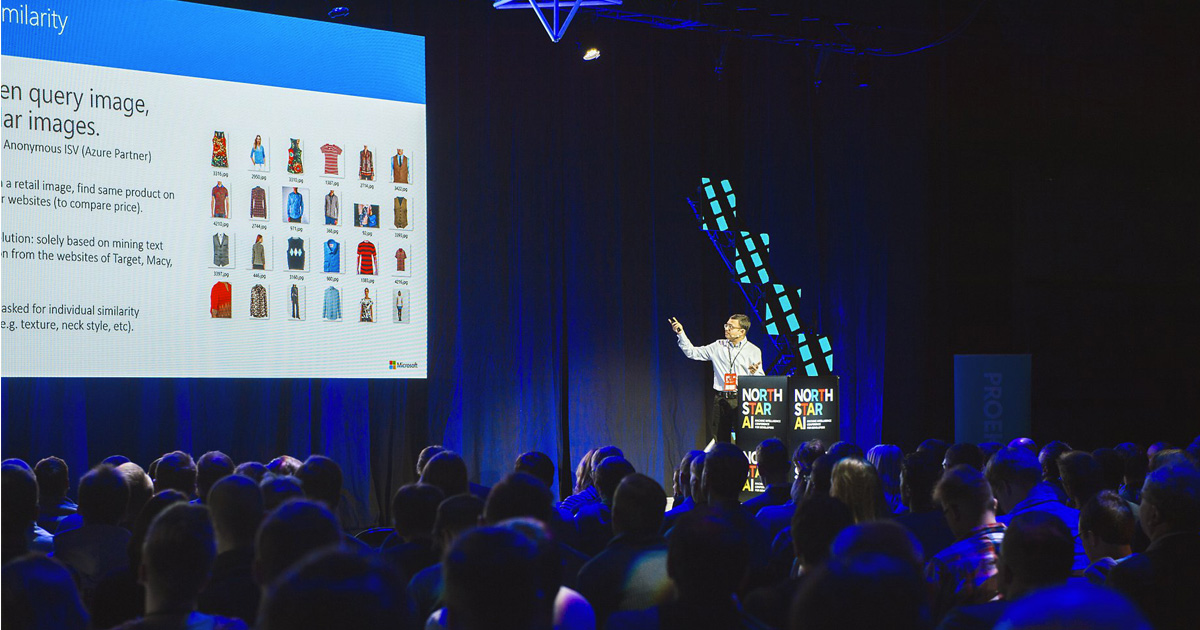
To explain and explore the greater potential of deep learning, Pathak first gave a comprehensive overview of all the places where scalable DL is currently occurring in the industry. He also hinted at how this technology might increasingly infiltrate our daily lives as we move forward.

Examples of where Microsoft Deep Learning Technology is being used:

  • Cortana – uses speech related APIs for transcribing and translating speech in real-time.
  • Bing – uses deep learning to enhance advertising platform and tools.
  • HoloLens – while use cases for this product are still being formed, there are many ways for augmented reality (AR) to integrate and utilize DL technology.
  • Office 2016 – uses deep learning to enhance popular programs such as PowerPoint.

Pathak explained that all of these powerful products have AI components already built into them and are constantly being further enhanced with deep learning capabilities. He also noted that Microsoft’s deep learning tools are being used beyond the Microsoft family of consumer-facing products.

Deep learning model example

For his first example Pathak cited the Chinese startup Airdoc, which provides doctors with powerful tools to help them detect and diagnose life-altering diseases such as diabetic retinopathy—a disease which is rampant in a country with over one hundred million diabetics. Using Microsoft’s Cognitive Toolkit together with Azure GPUs, Airdoc was able to cut down on training time for its own deep learning models and assure data security.

Another example that Pathak pointed to was Microsoft’s speech breakthroughs. With new tools, such as a powerful translator that can translate real-time conversations between people speaking in two different languages, the company is vamping up favorite products such as Skype and PowerPoint. The Asian phone carrier Huawei has also partnered with Microsoft to utilize these capabilities in newer versions of their phones.

These are just a few of the innovative ways that deep learning technology is being leveraged to radically transform useful tools and platforms. In his talk, Pathak noted that it is important for developers from all backgrounds to take part in further building this technology; there is a need for openness and democratization.

While machine learning has not always been accessible to coders with fewer resources—mainly due to the high energy cost and tremendous amounts of data involved in the training process—Microsoft is actively trying to remedy the issue. In fact, Pathak himself offers a free deep learning course online.
How You Can Contribute to the Industry

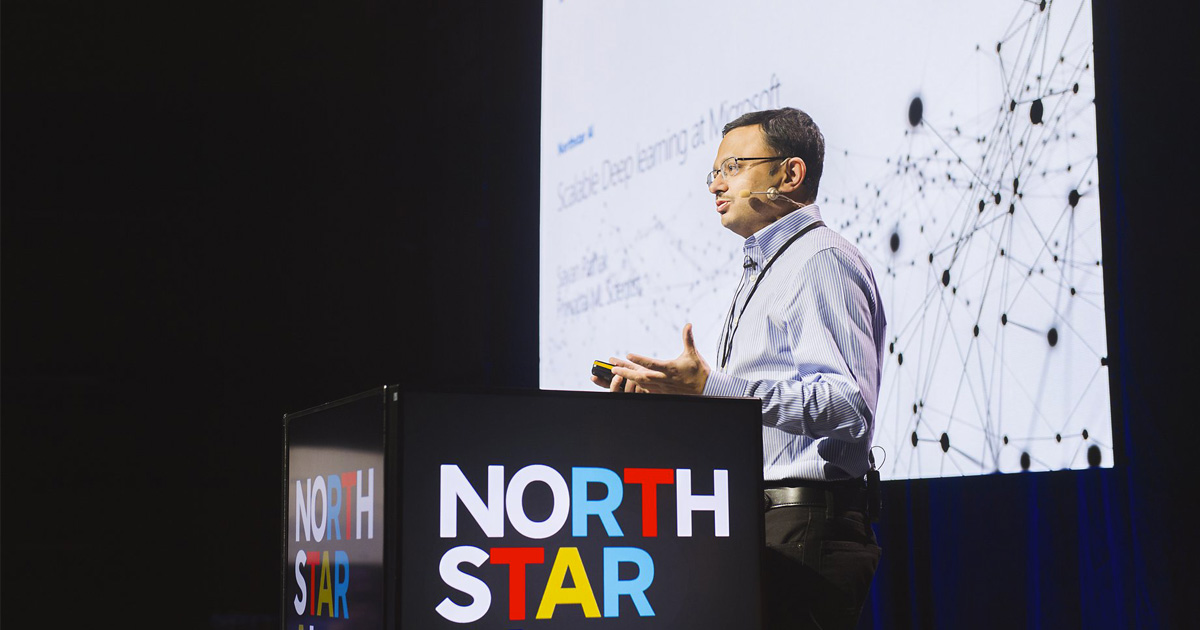
After providing background on where machine learning is being used today, Pathak turned his attention to some of the tools that Microsoft offers to developers. “We have a role to play” he said in regards to the crucial development of neural nets.

Whether it be individuals or whole startup teams, Microsoft Cognitive Services is an invaluable set of APIs that developers can tap into to complete various tasks related to speech, text, and image-related vision. Instead of building and training machines from scratch, coders can take advantage of this resource and actively start building their own applications.

According to Pathak, the Microsoft Cognitive Toolkit (CNTK) provides low level APIs which offer incredible flexibility. “The distributed framework is one of the easiest ones I have come across,” he said. “I’m biased maybe,” he added with a smirk.

CNTK allows developers to compose arbitrary neural networks into complex computational networks. The toolkit uses graphs to represent neural networks, explained Pathak. Most of these networks have automatic differentiation built into them, which enables the engine to optimize the workflow. With these tools developers can edit the models, clone them, and fine tune them to fit their applications. A major plus of CTNK is that it allows you to have lego-like compositibility for different applications.

Introducing ONNX

One of the challenges of machine learning, said Pathak, is that a variety of toolkits have to operate on all framework/hardware combinations. Moreover, it is not easy to translate from one framework/platform combination to another. Even in a large company like Microsoft, this means increasing fragmentation across teams. The solution, Pathak argued, is an intermediate representation.

Enter ONNX – an online neural network exchange that is an open format to represent deep learning models, supported by CNTK, PyTorch, Caffe 2, and MXNet. Microsoft and Facebook teamed up to create this open ecosystem for AI model interoperability out of the need to homogenize the stack. What’s more, a wide range of partners are already working on this ecosystem.

The strategy, said Pathak, is to drive AI apps and models to be built and run on Microsoft platforms. “From Microsoft’s perspective, the key is to support any popular network. The idea is to provide this IP to the community so that they can build solutions.”

ONNX is an open source intermediate representation of a computation graph with common OPs and semantics. “This is what is driving the AI field for common people who don’t have large access to resources, data, technologies, or software know-how,” said Pathak. As an open source technology, ONNX is opening up a whole realm of opportunities for the community.

“We are looking for contributions from the community. The more the community participates, the more the AI ecosystem will grow better and democratize AI resources and tools,” Pathak explained as his talk drew to a close. To learn more about these technologies, be sure to visit cntk.ai and onnx.ai.

If you want to listen to Sayan Pathak´s speech, check the video:
Manufacturing: How Analytics Unleashes Profitability and Productivity

At our recent Seminar on predictive maintenance and condition monitoring of devices in the manufacturing sector, Proekspert discussed why digitalization doesn’t always mean huge costs or long-lasting projects; and why it is crucial for manufacturing companies to consider the importance of analytics.

“Low growth is forcing manufacturers to squeeze every asset of theirs to obtain maximum value. The next target is their own data.”  – Peeter Meos, Data Science Lead at Proekspert

Summary:

  • Why analytics in manufacturing matters
  • Discussion-based concerns
  • Is digitalization affordable?

Why Analytics in Manufacturing Matters

Most manufacturers have already made the most noticeable changes to enhance their operations, using well-known methods to maximize as much productivity out of their operations as possible.

In a slow-growth environment, companies must search for new ways to boost the productivity and profitability of their manufacturing companies.

However, there is one significant asset that manufacturers have overlooked and not optimized: their data.

Profiting manufacturing industries

Manufacturing industries generate enormous volumes of data, but several have failed to grasp this mountain of potential data intelligence. Historically, manufacturers have lagged compared to other industries in their IT capabilities.

Thanks to the cheaper computational power and rapidly advancing analytics opportunities, manufacturers can make that data more meaningful and work for them. From accumulating information from multiple data sources, or utilizing machine learning and visualization platforms, all processes will unearth new ways to optimize their manufacturing processes.

Recent Discussion with Manufacturing Sector Leaders

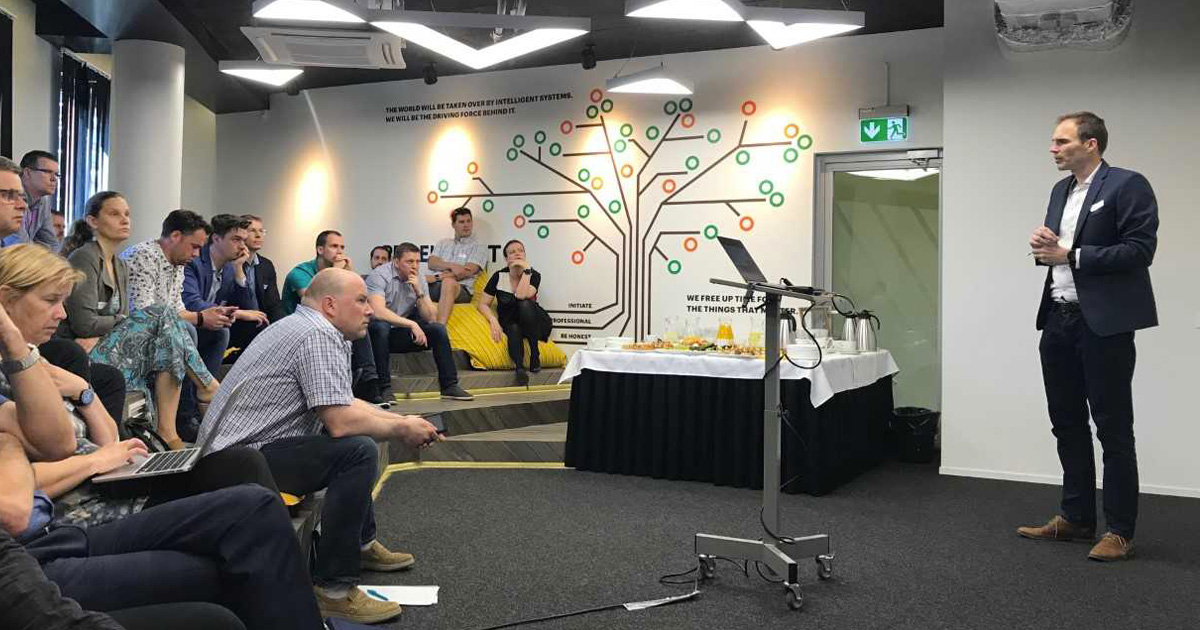
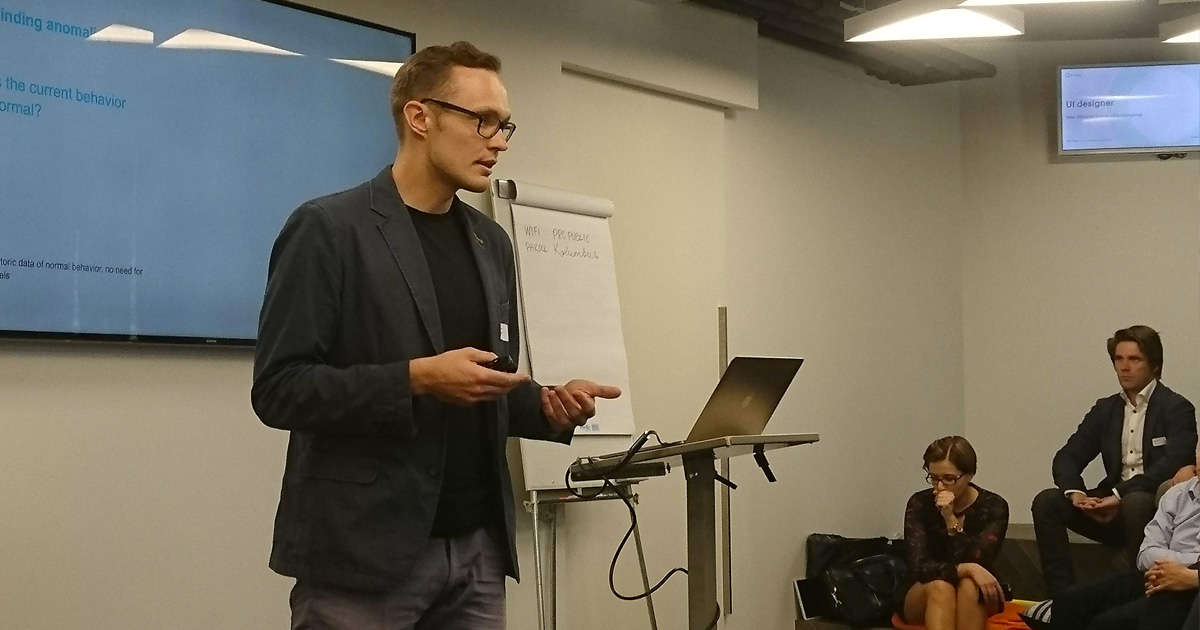
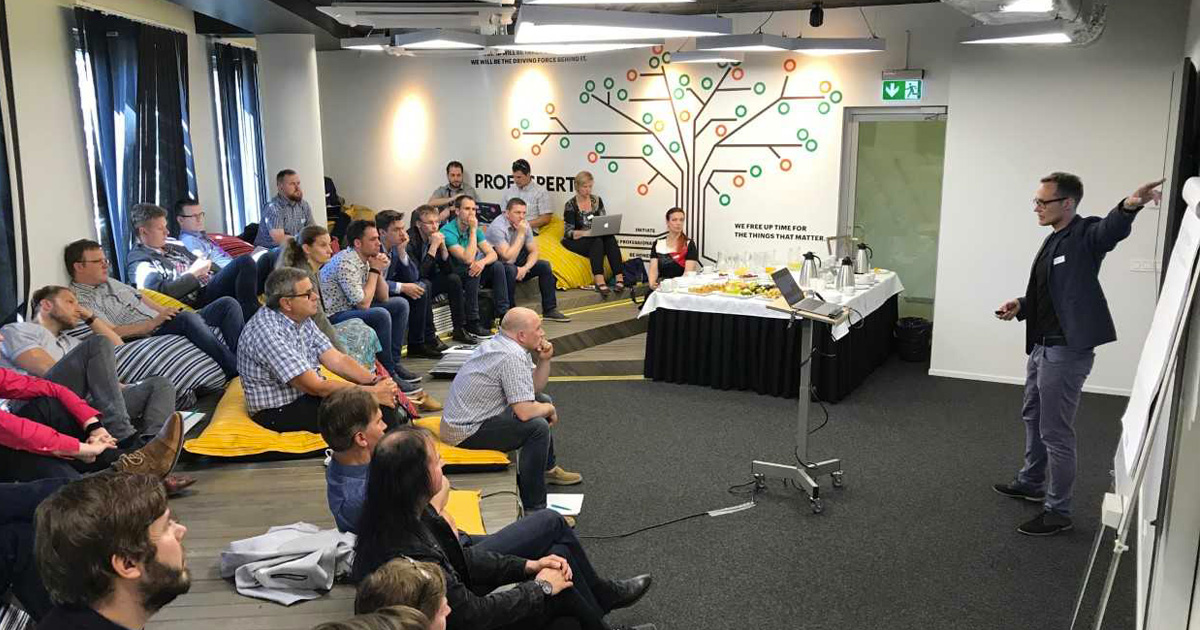
At the Analytics in Manufacturing seminar on 24th May 2018, Proekspert invited some select invitees to their offices to discuss the impacts of analytics, of not digitizing quick enough, and how affordable IT services for the sector has become – bedding some myths along the way.

Common concerns that we targeted during the speeches and discussions:

  • Is it easy to adopt?
  • How immediate are results?
  • Why use the ‘Cloud’?
  • Information Security (INFOSEC) is paramount. How is this guaranteed?

Peeter Meos, Data Science Lead at Proekspert discussed that adoption is easy when you target low-hanging fruits, and not consider a vast overhaul of a company’s processes.

Peeter went on to describe that because data science can target these low-hanging fruits, companies quite soon see results by:

  • lower costs to the production processes
  • avoid downtime
  • improved scheduling
  • identify inefficiencies and decrease losses

Lastly, the attendees were reassured that with a customized solution as opposed to using a Cloud option manufacturers are guaranteed that confidentiality and integrity are built into software designs, ensuring data security.

To conclude, Peeter emphasizes that manufacturing organizations should “start now, and start cheap.”

Is Digitalization Affordable?

For many manufacturer organizations, the thought of hiring IT services is daunting. Many are put off by the myth that IT projects have to run into hundreds of thousands of euros and completion takes quite a long time to implement.

It can be challenging to judge how qualified a company like Proekspert is when manufacturing leaders themselves are not well versed in the digital transformation technology. Additionally, several companies are put off by hiring IT specialists internally because salaries can be higher. Hence, it is a good idea to outsource IT to a specialist company.

The path organizations choose should be determined by the type of IT expertise they require, how integral digital technology and data is to their overall business plan, and how large the business is.

Services to manufacturing companies

Proekspert’s team of specialists deliver services to manufacturing companies from at as little as one day to one week, and the cost is not so eye-watering as you would think. Proekspert believes in being flexible and agile – our approach is to examine the business case and utilize the data concerned to create meaningful prototypes that are quickly deployed.

Proekspert understands that it is necessary to overhaul a process entirely – merely expand and enhance the workflow using companies’ data. Like how we helped to find a way how to increase production optimization by 5% or save 10% by optimizing HVAC systems using machine learning and predictive analytics.

In any collaboration with companies Proekspert passionately believe that it is possible to move forward with small steps, validating the business case, cost, and benefit within each step. Our seminar demonstrated how to move forward with these small and cost-effective steps

Analytics needs a foundation that scales. See Proekspert’s data platform engineering.

3 Principles to Foster Great Teamwork

Proekspert’s analyst Andrus Kuus shares stories about being a successful team leader at North Star conference.

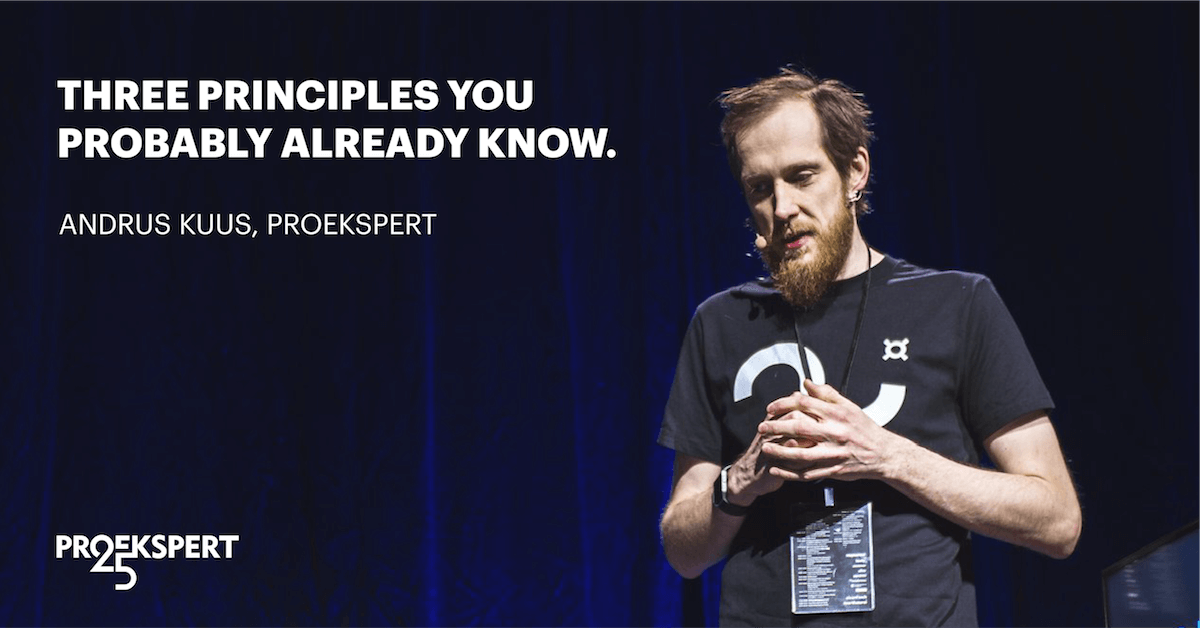
When Proekspert’s Andrus Kuus got up to speak at this year’s Northstar AI conference in Tallinn, he entertained the audience with an inventive speech. Having worked in the software industry for over 23 years, Kuus drew on his many experiences—including that of being an analyst at Proekspert—and shared some important insights on teamwork and project management.

“Today I will tell you three stories about the principles I follow in my work,” he began. “I believe that these principles are also relevant in the field of data science. So let’s start.”

Teamwork does not get better by itself.

Kuus’ first story was about his uncle, a woodworker. He explained that his uncle creates unique furniture, and rarely has a waitlist shorter than 6 months. In other words, he’s a busy guy who often has to reject new work because he feels he cannot deliver results within a reasonable timeframe. This uncle, explained Kuus, also has a son who occasionally helps him build furniture. Generally, it makes complete sense for the two of them to collaborate and share the workload. However, they don’t do this often.

When Kuus asked his uncle why, he was told that the two men have different work-styles that do not mesh well. His uncle gets frustrated when he has to work with his son because suddenly his tools are misplaced, the tempo of the work is different, and the two have trouble agreeing on creative decisions.

Why is this relevant?

Kuus said that it is quite safe to assume that within a few years those attending the conference might be working in a team of data scientists. It also quite safe to assume that a lot of their teammates will be people fresh out of university who really don’t have much experience working in a team.

“If you don’t want to end up in a situation like my uncle,” said Kuus, “you have to deal with that problem.” He also went on to say that the first thing that needs to happen is for you to acknowledge that teamwork does not get better by itself. Somebody else cannot solve the problem for you. As it turns out, as a team lead, you have to deliberately spend time on improving the way you work together. To accept this responsibility is an important step.

You need to make a habit of discussing why and how you do things in your team.

Strive for clarity in communication

Kuus’ second story was drawn from his own work experience. In the beginning of the 2000s his team had to take over the development of a system that calculated bonuses for the customers of a large company.

As is usual in these cases, there was a set of project assets that was handed over to the new team. The most important of these assets was the source code, which in this case came from a corporate workstation.

“When we got access to the computer we found the code,” said Kuus. “In fact, we found several versions of source code located in different folders. It was unclear which one of these we have to use. Soon we found out that there was also another workstation that contained code. So eventually we had 7 different folders containing 7 versions of the code.”

Kuus said that the team tried everything. They analysed the code, ran comparative tests, cross referenced the documentation. Unfortunately, it turned out that none of these folders contained the code that was running in the live system. “So we did something quite unusual,” he explained. “We patched the sources together from the content of several folders and added code that we got from decompiling the live system. This code was our best guess. And fortunately it worked!”

This project was no small task, explained Kuus. It took weeks of hard work and brainstorming. He then referenced a quote from Martin Fowler: “Any fool can write code that a computer can understand. Good programmers write code that humans understand.” This principle applies to more than just writing code, argued Kuus. “Strive to make all your work understandable to other people.”

The moral of this story: choose the tools and practices that help you achieve clarity and understandability. Refuse to use the tools and practices that make it harder.

To keep track of things, Kuus recommended using a task management system instead of Excel sheets sent over email. Choose wiki to store documentation and knowledge instead of Word documents that are hard to update. Choose version control over creating multiple copies of folders on corporate workstations. It is important to have clarity of mind when identifying your tools and processes.

Data scientists talk to data?

The final story of Kuus’ presentation—incidentally taking place very close to the lunch hour—had to do with food. “I seldom watch TV nowadays,” said Kuus, “but for some reason it seems like every time I turn on the TV I always end up watching this cooking show called Masterchef. Yes, the one with Gordon Ramsay as one of the judges.” Kuus explained that often the contestants on this show have to cook food using really strange ingredients like testicles, chicken feet, or something similarly obscure.

During one episode in particular, one of the contestants, a girl named Diana, was struggling with tripe, a part of an animal’s stomach. Like any average person, Kuus explained, Diana had never cooked tripe before. Nevertheless she had to do something, so she improvised.

She did her best, and within 45 minutes produced a nice looking menudo from it. For clarification, menudo is a spicy mexican soup made of tripe and corn tomatoes. According to Wikipedia, this dish normally takes from 4 to 7 hours to prepare. However, Diana tried to make it in 45 minutes.

“I believe that it comes as no surprise that the first thing Gordon said after tasting the dish was ‘I’ve got some raw tripe here,’’ said Kuus. Consequently, Diana had to admit that she had cut some corners and had therefore failed. Of course this created drama, and Diana was not made the next Masterchef.

“But why am I talking about a TV show?” asked Kuus. “Because you and I are living lives that are sometimes very similar to a TV show.”

We often do things that we have not done before, said Kuus. We usually do these things under time constraints and pressure, and often with limited information at our disposal. But unlike the TV show, where the ability to validate ideas has been artificially limited, in real life we can ask questions and validate our ideas.

“In my experience,” said Kuus, “ we tend not to use this ability and just improvise.” Maybe this happens because we’re afraid to look stupid, or maybe we do not want to bother people. “I don’t know. But the latest Kaggle survey shows that almost 25% of respondents feel that their research results are not used by business. Maybe this is the outcome of that,” concluded Kuus.

The third moral: validate your ideas before spending lots of time working on and fine-tuning them. Communicate. Don’t be afraid to ask.

It is said that the hardest part of data science is asking the right questions. Kuus doubts that anyone can ask the right questions without first asking lots of wrong questions. There is that cliche that data scientists talk to data. “I think this is wrong,” said Kuus, “data scientists should talk to people. Because only then is it possible to create insights that have real value.”

To wrap up, Kuus turned to his own experience once again. “Lately I have had the opportunity to talk to data scientists from several organizations,” said Kuus. From these talks he discovered that a lot of the problems that data science teams are facing today have been relevant in software development for decades. “I think that our experience can help data scientists face these problems more easily,” he said.

The three important principles that Kuus hoped to leave his audience with are:

  • Regularly discuss why and how you do things in your team
  • Choose tools and practices that foster clarity
  • Validate your ideas before spending time fine-tuning them

These principles are obvious, said Kuus. However, as it is often happens with obvious things, they are easily forgotten. “I hope that my talk reminded you to think about them in the future,” concluded Kuus.

Adventures of a Data Detective

How frog sounds, birdsong, and other real-life exploits of a data scientist resulted in crafting a tool called Kogu.

The data detective has the superpower to predict the future

Being a data scientist often feels like being a detective who needs to find out how and why something happened, much like a police detective. The difference is that data detective’s job can have a more significant impact: the data detective has the superpower to predict the future.

Data detective – The coolest job in the world

The combination of challenging problems, innovation and the potentially significant impact of the work makes detecting data one of the coolest jobs in the world. The awesomeness of being a data detective arouses the Instant Gratification Monkey. These rewards are brought on by the manifestation of creative and innovative work in the form of discoveries or improvements in model accuracy.

For hobby projects done for your gratification, the hunger for quick wins might not be considered a problem.

However, if you are working in a team or have a long-term project on your hands, the quick high you receive from discoveries can cause issues for the Future Data Detective. Like the universe moving towards chaos and disorder, so will your data science projects if you are not willing to put in some additional effort.

Frog sounds and the problem of reproducibility

Deep learning in data science

The first data science project I worked on was to assist a colleague in classifying frog sounds using Deep Learning. My initial detective work went rather well and resulted in a conference paper. I was eager to earn more doses of gratification that the project was offering me, yet this resulted in messy structure and code.

It did not seem to be a problem, as it was a short solo project, so I could vividly remember all the experiments I did, and hyper-parameter sets I tried.

This Present Data Detective was happy.

Fast-forward three months and I are happily working on a new project with my first credited scientific publication. I received an email asking me to share the code for the published paper.

I had forsaken best practices for instant gratification

I located the folder where I kept my code, ran the algorithm, and produced results which weren’t as good as claimed in the conference paper. It took me a half hour to go through the code and understand why it did, the way it did. I was furious at the Past Data Detective in me for not using Version Control System (VCS) and not writing Clean Code.

It turned out that Past Data Detective had introduced changes to the code for testing a couple of new ideas and getting another fix of instant gratification after submitting the paper. As the process of reviewing and publishing the paper took several months, I had moved on and forgotten the changes I had introduced. I had forsaken best practices for instant gratification, leaving the Present Data Detective in a sticky situation.

It took me several days before I could restore the code so that it corresponded to the structure and results I described in the paper.

Birdsongs and learning from failure

My next adventure was to classify birds by their songs, which was a much harder task. However, this time I was prepared: I wrote cleaner code, my project had better structure, and I used VCS more often. It took a more effort on my part and fighting to resist the urge to seek the Instant Gratification Monkey, but still, I ran into unexpected trouble.

The problem was that the experiments were not connected to the code.

There was a long summer between the end of my internship and the time I started to write my thesis. At the summer’s end, I could easily find the code, and I was much happier at how readable it was.

However, there was a problem with the way I logged the results of my various experiments. I used Google Spreadsheets to store some values about pre-processing and training parameters, but I also used free-form text comments.

The problem was that the experiments were not connected to the code, and for most of the experiments, I could not recall what the Past Data Detective’s comments meant. I was not sure what I had already tried, resulting in several days of computing power gone to waste (for example, one training took around eight hours).

Since I had learned from past failures, I wrote a script that would save the logs and all necessary files, including the code files used for the experiment, to a new directory. After completing the training, I then opened a log file, obtained the results and put these in the spreadsheet.

When I began working for Proekspert, I discovered I was not alone in my problem.

Other data scientists were also conflicted between obtaining fast results and having a manageable project. Together, we decided to start automating the annoying parts of our detective work, so we could concentrate on the results that mattered to us.

This drive towards reducing energy and time spent on gaining order in data science projects has resulted in a tool we now call Kogu.

Kogu is born

Kogu – an Estonian word translating as “whole” or “entire” in English – is a unique tool for managing data science experiments. It helps structure projects, giving each a standard structure, allowing users to quickly find relevant data, reports, source code, and figures from a project.

The philosophy behind Kogu is much more visionary.

Kogu enables a variety of versions of code to be managed and can be used to link source code with experiments, giving us reproducible experiments. The results of each experiment can be can be logged together with metadata; like interactive figures, tags and comments. This helps users determine what the Past Data Detective did, plus, it can also be used to check how and what fellow data detectives are doing at present.

On its surface, Kogu is merely another piece of software, but the philosophy behind it is much more visionary. It introduces best practice and processes to fellow data detectives, so we can work on things that matter whilst keeping projects sustainable.

Believing in Kogu is believing in:

Efficiency in data science
Focus on execution and delivery, not on the past. Kogu logs the environment, data, script, parameters, and outputs for you to easier find, compare and reproduce experiments.

Transparency in data science
For data scientists and for managers. Kogu is your single point of truth where you can compare experiments and share them with your team.

Knowledge base
Unified project structure combined with logging of experiments will not replace you, however, will make it easier to make sense out of your work when you are gone.

If you share my vision on organising your data experiments with minimal overheads then collaborate with us by joining our beta community.

Would You Trust AI with Your Life?

Peeter Meos, Data Science Lead
Katariina Roosipuu, Marketing Lead

The inevitability of new ethical questions arising from advancements in technology presents  many researchers and scientists with quandaries. These range from weighing the effects of medical drug trials on consenting subjects, to the trade-off of free and open internet access for security and safety online.

Artificial intelligence has created an entirely new range of ethical questions that challenge the very fabric of our society, and threaten to undermine or trivialise laws that have stood for hundreds, if not thousands of years.

In technology we trust – artificial intelligence

The more we entrust key aspects of society and our daily lives to technology, the more we will rely on it to make critical decisions about things ranging from what track to play on the living room audio system, to whom to save in a car crash. These two examples sit awkwardly together, but the most awkward thing here is that the outcome of both these two decisions rely on pretty much the same AI process.

Specialists at Proekspert spend their days (and most likely nights) pondering these moral questions. As a company that champions AI technology we have a duty to examine the moral and ethical minefield that surrounds our work.

Who is responsible for the outcome? The creator programs the outcome, and no more. AI is a decision made from a bank of data, but some decisions and situations will require far too much consideration for any human to be able to program them.

AI conundrum: The trolley problem

The favourite AI conundrum is the “trolley problem.” In a crash, do you save the driver? Or the paying customer who bought the ticket? Is it acceptable for a product to decide to kill them both in order to save a child? Ethically, you should save the child, right? And how would the AI even know? There are too many factors at play: speed, intention, demographics, and the culturally-defined values of each individual. Because of this problems like these, the industry is going through a period of introspection. And so it should.

When engineering AI you have no social mechanism: you have only robotic laws. An artificially intelligent machine isn’t a legal entity (yet) and therefore is technically above the law. So where does the blame lie if a machine kills? With the programmer? With the owner? Or with the person killed? Decision mechanics within the AI world have to process more data to become more accurate, working within a set of rules entered by a well-meaning creator. AI also creates its own rules, gleaned from the environment; an intelligent learned behaviour spawned within a set of carefully derived parameters.

Ultimate responsibility in artificial intelligence

The truth is the creator is ultimately to blame, even if it’s just by default. AI cannot make ethical decisions unless it is programmed to do so, and even if parameters or ethical constraints are laid down by teams of hundreds, it’s near impossible to predict the kind of decision that will be made in every single situation. The only thing that can be guaranteed is the parameter within which the AI can work, and more importantly the lines it cannot cross. But in a situation like our example above, where in a tragic event someone must die, the burden ultimately falls at the feet of those without the in-the-moment knowledge or live information from the event, so essential in any human split-second decision.

It’s not all doom and gloom, far from it. We see AI as a tool to improve the human experience, not threaten it. The role of AI in the elimination of waste, the streamlining of processes and the handling of simple yet monotonous decisions within an industrial setting for example, is proving invaluable, and more importantly carries little of the moral chaos that more headline grabbing applications do.

Release from monotony

AI frees up time, it allows us to devote more time to creativity, to be more productive and less constrained by routine. By releasing us from monotony, we can unlock our skills. It may be able to automate our work, but instead of putting us out of a job it allows us the freedom to do a better job, making even routine work pleasant as it takes away the boring part. We become more self-determined, independent and free to look for new solutions, set new standards and assume an optimised role within our work.

In this sense the ethical questions are less dramatic and more attainable, but still essential. As one person is given greater power through the use of AI, they need a heightened ethical code to follow. When people are on the line, their education and personal development become the central ethical question, their value laid bare.

No matter how routine the role may be, such as a production line or repetitive process, there will always be the need for tough decisions, and these can as yet only be taken by a person. It’s when we accept this that the dilemmas surrounding more experimental applications of AI become naked and exposed, their progress impossible to fathom within an ethical framework and relying on technology with emotional limitations that struggles with the simplest of human decisions. The advantages of AI are clear, but its limitations can’t be ignored, and we may need a seismic shift in the way we as humans see the value of our own lives for any significant progress to be made, though it’s this kind of shift that may signal the beginning of the end for us.

If you feel like discussing it further, feel free to contact us: peeter.meos@proekspert.ee or katariina.roosipuu@proekspert.ee

Unknown Unknowns and Industry 4.0

Small and medium-sized companies (SMEs) don’t know what they don’t know and that’s okay. Because nobody else knows either.

Everyone’s talking about the hype cycle for generic IoT platforms for the manufacturing business. Everyone seems to be doing it, too, and there is a palpable fear of being left behind. However, after a little investigation, the situation is naturally more nuanced.

SMEs and risk aversion

There are industry giants like Siemens leading the way with strong implementations of their digital strategies. But the true backbone of the manufacturing world, SMEs, are believing the larger narrative yet simultaneously trying to avoid the risks inherent in turning their businesses towards the still partly-uncharted waters of digitalisation.

Look into digitalisation platforms

When you take a deeper look into digitalisation platforms on offer, one collides with the real life practicalities of combining legacy technology with modern platforms and practices. Without exceptions, all real-life solutions in manufacturing require a high degree of customisation that most current platforms have a tendency to ignore. Integration is expensive, deals with legacy tech, and most likely is not a scalable business.

Bridging the gap

The gap between real life implementation and the vision of digitalisation is yet to be bridged efficiently. The gap itself is two dimensional, spanning organisational maturity and technological readiness. In order to address both, we advocate a step-by-step approach: moving from creating incremental data collection to establishing situational awareness to advanced analytics tools.

The reason behind this approach is our belief that experience matters, and that before taking on complicated tasks it’s necessary to get the fundamentals right. It is not efficient to deploy advanced predictive models before an organisation has experience in data collection, data quality, and visualisation.

For SMEs with fairly limited resources, the true challenge lies in how to jump start the digitalisation of a traditional organisation with efforts that are low risk, have a shallow learning curve, and provide the possibility to fail fast. Since many SMEs feel they have reached a stable level of efficiency they are risk averse to implementing drastic changes, changes that have a positive effect that will be difficult to assess beforehand.

Accept the experimental nature in digitalizing the operations process

An approach that seems to make the most sense is to accept the experimental nature of this journey and start with quick, easy and cheap proofs of concept that validate a customer’s specific value proposition.

It may very well be that the traditional way of organising the business is already optimal. This approach provides the least painful method of either proving or disproving that. Start with a quick business discovery workshop, design proofs of concept and prototypes, adjust them endlessly, and find your way in customising the digital landscape to fit your business. In the end you’ll have built a solid support structure that carries the organisation into the future in a robust and flexible fashion. As we love to say in the IT world: Experiment, fail fast, iterate.

If you feel like discussing it further, book a 2-hour free consultation to understand what can data science solutions do in your company: peeter.meos@proekspert.ee 

On the Transferability of Software Engineering Knowledge

Proekspert has 25 years of experience in software development. Creating a team of data scientists in our company we learned the hard way that some communication practices software developers use daily may not be so obvious for machine learning experts.

Data science packaged as macine learning and artificial intelligence

Recent years have witnessed a new rise in data science packaged as machine learning and artificial intelligence. This time the revolution has finally broken out of academia and research labs to the applied business sector. We see practical ML-based applications bettering traditional algorithmic solutions in their ability to tackle a wide array of problems.

The talent shortage is here to stay in machine learning and artificial intelligence-based products

We should still acknowledge that AI- and ML-based products are in the embryonic stage. Early adopters — tech giants with deep pockets — are hoovering up the talent and pouring lots of money into practical application. The majority of organizations, however, are only taking their first steps in the field.

Data science barriers

According to a 2017 survey by Kaggle[1], close to half of data science practitioners see the “lack of data science talent” to be one of the most important barriers in their work. As experience from the IT sector shows, this problem is not diminishing. According to a recent MemSQL and O’Reilly Media survey[2], 88 percent of respondents said their companies already have, or have plans to, implement AI and ML technologies. Soon this lack of talent will become even more serious.

The current situation in data science appears to be very similar to the problems faced by companies during the 1990s and 2000s where a wide array of new problems that could be solved with software created a huge demand for software developers. The world soon understood that the deficit of software engineering talent can be dealt with only when the principles of the software development are improved.

Not an engineering problem

Until the 1990s, software development had been viewed as similar to production. Subsequent decades proved this analogy not to be the best. There are few serious problems with engineering and production in software development — or at least the technical problems are much easier to solve. The harder problem to tackle, in my opinion, has been communication.

I believe communication in a broad context is the main reason successful teams perform better than less successful ones. I do not mean only communication used to understand the problems to be solved, but rather the communication of knowledge and progress inside a team and the practices that allow you to communicate with your “future self.”

Our experience with building data science teams shows that results-oriented people who are not used to working in teams often require training in learning to communicate. The most important change in mentality when shifting from one-man projects to teamwork is the understanding that most of the work you do impacts others on your team or people who will join your team in the future.

Lessons from software development

Here are some practices originating from software development that our ML team has found useful in their everyday work.

1. Reduce your projects’ cognitive load.
Work in software engineering and data science means constant learning. To reduce that load it makes sense to have consistent structure in your projects. This includes both the process and how code, documents, and data are organized. Agree on the formats within your team (or organization) and refrain from changing them too often. We’ve found Cookiecutter Data Science to be a good source for best practices on work item organization for data science projects.

2. Make experiment set-up easy.
Often setting up the environment for an experiment is complicated. Sure, over time you’ve installed all imaginable python libraries and the scripts run in your machine without problems. But have you considered how much time you’ll spend to set up your environment when you get new new computer? How much time will you need to spend to get “the new guy” up and running? There are good tools available to log and recreate the environment. Conda or Virtualenv for example. Depending on the technical skills of your team, packaging your experiment environment to a Docker image could be extremely effective.

3. Script your pipeline.
Most experiments have to deal with data acquisition, cleaning, splitting and feature definition. Script these transformations. Manipulating the data manually each time new data becomes available, or in case you want to change the split or features could become very time consuming in a long run. When there are multiple steps in your data preparation process the scripts also help to reduce the risk of human error. It may even be worth pipelining these scripts when the operations take a long time to complete so you can run them unattended. You may use simple shell script, makefile or a dedicated framework (like Airflow) for longer-term projects.

4. Use a single source of truth for your code.
I couldn’t imagine a software team nowadays who would not use version control to manage their files. The same should become standard for data science teams. In addition to a convenient way of safekeeping and sharing your code within the team, it allows safe experimentation — multiple branches of development can exist in parallel.

5. Log and store your results.
Versus software engineering, data science includes more experimentation. The paths you take are often dead ends in a maze and it makes sense to map where you’ve been. The best comments in source code often describe alternative solutions which might seem tempting to take but have proven to be less effective or incorrect. It is best practice to document architectural decisions implemented in software with the reasoning why this particular approach was taken. The same applies to ML.

6. Create tasks with a clear Definition of Done criterion.
What’s the goal of your current task? Have you agreed on what it takes it to finish? In some cases, for example in EDA, it may be hard to define what is a task and what are the tangible results you expect. In such cases, logging what’s been done and timeboxing activity will help keep you out of an infinite loop. Based on the findings better understanding of the goals may arrive.

7. Visualize your progress.
One cannot overestimate the value of knowing what others in your team are working on. Usually, organizations employing data scientists have working task management systems. Maybe it’s an online system; maybe a scrum- or kanban board at your office. Visualizing tasks and progress allows the team to find out if somebody is stuck on a task and needs help.

8. Communicate your progress and intermediate insights.
Agile practices in software development have proven that shortening the communication loop between the team and stakeholders is crucial to building a good product. The same is true for data science. Demo your intermediate results and discuss your insights with domain experts and other stakeholders to validate the paths you’re taking. This ensures you’re not wasting time doing the wrong thing and increases the likelihood of errors being spotted early.

Years of software development have given us simple yet useful practices that facilitate learning, knowledge sharing, and communication, allowing teams to achieve better results. These practices may be unknown to people with other backgrounds. Building on those practices and putting your scarce data science talent to its best use will help bring to life the awesome power of ML and AI applications much faster.

If you feel like discussing it further, feel free to contact me: andrus.kuus@proekspert.ee

References:
www.kaggle.com/surveys/2017
www.globenewswire.com/news-release/2018/02/07/1335563/0/en/Survey-Finds-Machine-Learning-and-Artificial-Intelligence-are-Top-Business-Priorities.html

AI and machine learning lands in Tallinn

North Star AI, a long-awaited artificial intelligence and machine learning conference is bringing some of the best minds in the field of artificial intelligence and machine learning to the heart of Tallinn on the 8th of March 2018.

North Star AI brings together developers, tech leads, data analysts, technical founders, and anybody else who shares an interest in this area and where it’s heading. It’s a great opportunity to hear from some of the world’s leading influencers on the subject. North Star AI focuses on the exchange of real-life experiences and case studies from practitioner to practitioner. All of the speakers are either developers or analysts; with a focus on the benefits, they can bring to other developers, rather than having an explicit commercial interest.

Proekspert is a proud sponsor and collaborator with North Star AI, helping to stage the first and largest machine learning conference in the region. As well as being involved with the process of putting on the event, we will also be present both as exhibitors and speakers, not to mention that our data science team will be there in person.

The schedule is packed with great speakers:

Our keynote speaker, Sayan Pathak, principal machine learning scientist at the Microsoft AI Research Center in Redmond, WA, and faculty member at The University of Washington, will be speaking about scalable deep learning at Microsoft in depth.

We’re also very pleased to welcome AI and Blockchain expert Maxim Orlovsky as one of our speakers. Founder and visionary at Pandora Boxchain project, a medical doctor turned neuroscientist now holding several posts in the area of technology-oriented knowledge-intensive business. He is also the winner of the National prize in science and technologies (Ukraine), along with a number of International Scientific Soros Foundation prizes.

Anaconda CTO Peter Wang will speak about using Python for data science systems design. Peter has software design and development experience across many areas, including 3D graphics, geophysics, financial risk modeling, large data simulation and visualization, and medical imaging.

Other speakers include Siim Sikkut, Government CIO of Estonia; Ahti Heinla, CEO, CTO, and co-founder at Starship Technologies; Jaan Altosaar, Physics Ph.D. student at Princeton; Mattias Nilsson, AI Researcher at FOI and Swedish Defence Research Agency; Hendrik Luuk, CTO at AlphaBlues; and Peter Prettenhofer, a data scientist at DataRobot.

Andrus Kuus, software analyst here at Proekspert, will also be speaking to the attendees on the topic of streamlining data science projects, with a focus on how to unify, integrate and abridge teamwork and developmental processes to beneficial effect.

Let´s meet at North Star AI!

We are sure that everyone working in this area, will be able to benefit from the range of opinion and experience whilst attending, having the opportunity to meet and network with the speakers during the event. Our aim is to connect Estonian data science to the global scene and nurture the local data science and artificial intelligence community. Attendees looking to delve deeper into the subject will benefit from the wealth of knowledge and experience there will be, both on stage and off. Everyone is encouraged to network, ask questions and learn from the best.

For those more experienced professionals, it’s an opportunity to be inspired by new ideas, share your own ideas with others, and be part of a community that has otherwise had quite a few opportunities to gather and network in this part of the world until now.

See you at North Star AI!

Read more about North Star AI