How to have a successful hackathon experience

Hackathons are renowned for innovation, creative thinking and meeting others with like-minded abilities. Speed and agility have never been more critical in today’s digital world, where globalisation and technology have fiercely increased competition. At the recent Garage48 Cyber Security hackathon in Tallinn, Hans Metsoja, Proekspert Cyber Security Lead, witnessed first-hand this innovation as a mentor. Here are his takeaways:

  • What is the most critical point of hackathons;
  • 5 top tips for a successful hackathon;
  • Suggestions for hackathon mentors.

Learning is key, rather than winning

Contrary to what you’ve been told, the most critical part of these events is learning. There is no single winner – everybody wins. You and your team will prototype your ideas with the help of mentors, attempt to experience what it takes to come up with a plan and business model, attractively pitch the approach and build something.

Besides, you probably end up in a team with people who you have never met but this event is all about teamwork and collaboration, so you need to overcome social and nationality barriers plus, be a competent team.

It doesn’t matter what place you get, at least you gained new experience, knowledge and, you can continue with your idea, or come up with an entirely new one and instead progress with this.

Some will do better, but even if you don’t manage to build something that works – you will at least learned something.

The basics what you need to follow to have a successful hackathon experience.

Although it is usually usually moderators repeat these truths, but not all teams accept it, although the practice proves again and again that a lot of your success depends on taking good advice from people with extensive experience:

1. Listen to your mentors; they are there for a reason. Even if you have the best idea and are an expert in the field, if mentors suggest you read or learn something, it is wise to do. Whilst mentors emphasise with you that you are in a hurry and need to develop your product, yet there might be some valuable information there.

If you are a mentor, then nothing should stop your work – a perfect example by Karen Burns in Garage 48 Cyber Security 2018

2. Team leadership is vitally important. You, as a team leader, must ensure your team work together and solve any communication problems. If your organisation is not working together or have cooperative concerns, take the initiative and remedy the situation.

3. Project management is equally important. You need to preserve your focus; you only have limited resources to implement your most critical elements. So, don’t worry about every detail, split up your essential tasks into smaller sections – this will better aid you in achieving your goals. You can’t get there if you don’t start with small steps. And significant problems are both distracting and overwhelming, drawing your attention away from implementation, and as a consequence, you spend your time worrying.

4. Money and a business plan are essential, yet don’t focus on fine-tuning irrelevant details. You must have an idea who is going to be your customers and how are you going to capture fees. Thinking “let’s hope that some big player will buy us” might occur, but what if it does not? You will not be able to obtain quick funding from investors if this is your only revenue plan.

5. Lastly, don’t concentrate on finance in extreme detail. There is little benefit in discussing whether your product should cost €160 or €170 if you already know that the price range should be €100-€400. Sure, you can go into much more detail and plan if you have time. But if the hackathon has only begun, no need to fine-tune your pricing model is just a distraction taking away your precious time.

Is it really worth it to become a mentor?

Mentoring in a hackathon is a really great experience, it is not only about sharing knowledge and supporting the teams, it is an intense learning experience for mentors as well.  If you feel that you need some excitement, if you want to step out of everyday routine and challenge yourself, then mentoring might be a really great experience for you. You might get a lot of new energy, new ideas and excitement, but, be warned – you will also be quite exhausted a day after, or at least desperately needing some sleep.

Also, mentors have a team, too – a great opportunity to enjoy good teamwork and meet really interesting people with different experiences and working methods. It is also an immense satisfaction to see how much a team can evolve within 48 hours and how it is possible to create a real prototype with considerable potential from a very vague idea.

So, my suggestion to you if you get asked to be a mentor – say yes, at least once. Do not think of it as a way to impart knowledge to others – think more of what can you learn amongst other talented and enthusiastic individuals.

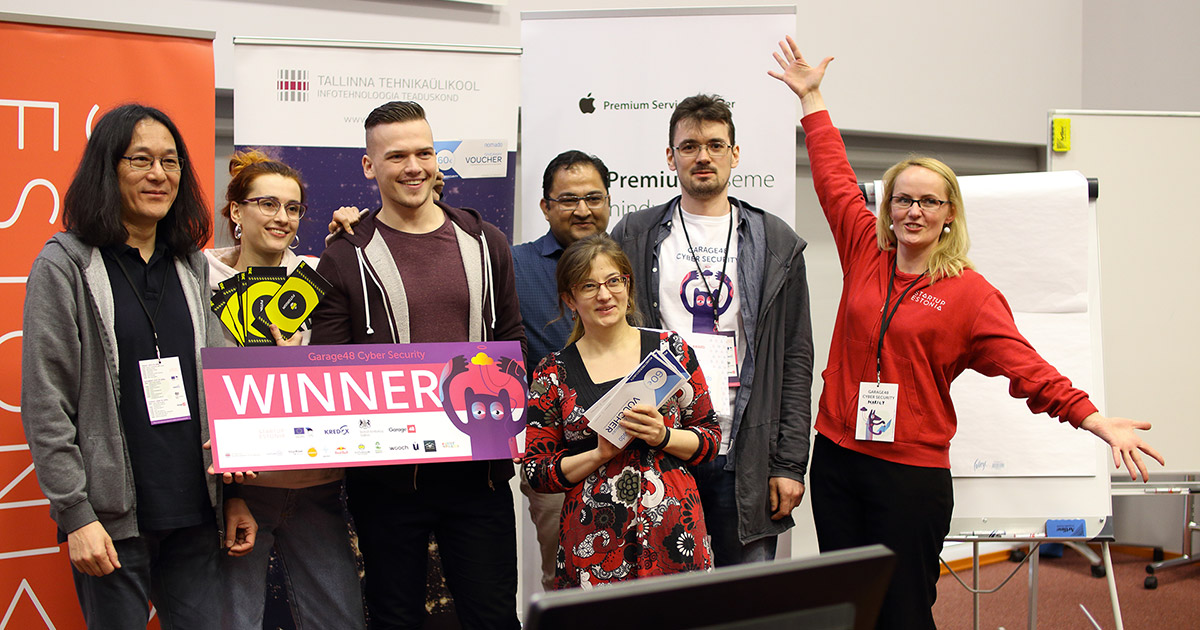
Garage48 Cyber Security hackathon´s team of mentors, picture from Garage48 blog.

Lack of Technological Cooperation Causes Digital Waste

Digital waste includes anything from simple email spam to huge unstructured data collection that nobody is capable of chewing through. Despite the fact that most of digital waste is generated automatically by computer programs and robots, the main reasons behind it are humans and our habits.

Digital waste

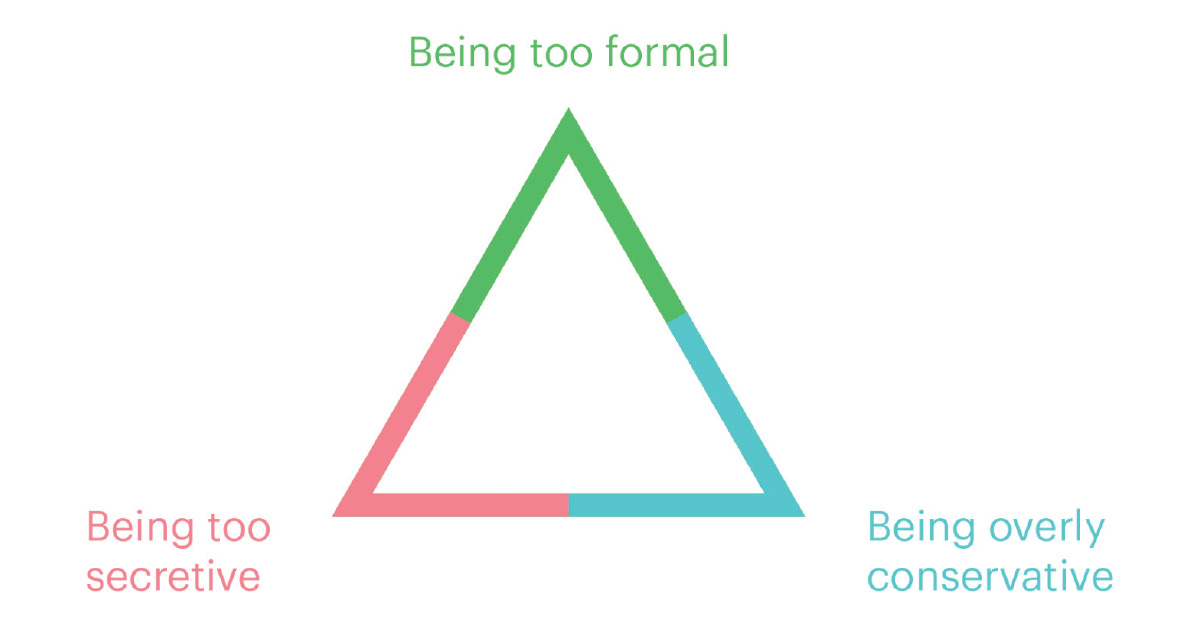
From a management point of view we can attribute digital waste to three major causes: being too formal, being too conservative, and being too secretive.

From a manufacturing point of view, these address at least four out of eight known wastes of lean manufacturing.

Bureaucracy and formality vs. the solutions-driven approach

One obvious reason for digital waste is the presence of overwhelming formalities where documents are created just because they are ordered, but nobody actually understands their real purpose. This is something everyone has experienced at least once in their work life. This habit results in tons of files nobody can read through and adds no real value to an organization.

Even if the initial reason for introducing excessive formalities might have been caused by a wish to address customers’ concerns or process-quality issues, probably at some point we just forgot to deal with the root causes and started filling formalities just because it seemed the most logical and safest way to continue at the moment. It happens sometimes when we’re fire-fighting to solve a unexpected problem fast and then move into repair mode to fix the consequences. And when we are tired of fixing our broken things, the band-aid made out of complex process documentation seems the most tempting thing to cover the problem – just to move on to value-adding work again.

Being overly formal and therefore superficial not only causes digital waste, but in manufacturing it transforms into excess processing, a waste of skills, and the lack of timely information caused by motion and waiting waste.

The desire to look at the technological edge as a competitive advantage

Inventing everything by ourselves and avoiding the sharing of know-how seems to give us a competitive advantage. Nevertheless there has to be a balance: restrict too much what your engineers can discuss with their peers, and you will kill their desire to innovate.

I admit that keeping production processes confidential is reasonable most of the time, especially in highly-competitive domains where it’s only matter of minutes before a stolen design is recreated in another factory in another country. But when we look at a smaller manufacturing cluster in a given region, small- and medium-sized enterprises (SMEs) with 50 to 250 workers and up to 50 million euros turnover, there seems no point to focus on keeping technological secrets between neighbouring enterprises. This is especially true when the companies are focused on export markets.

And even if the focus is partially local, keeping all the know-how proprietary and protecting it as a trade secret isn’t such a great idea. Why? Because markets outside of the region tend to look at the overall quality and fame of regional production and do not focus as much on sorting out which company’s products are great and which are not. It is more reasonable to work together to build better products and expand your private business contracts through that practice. In some cases several smaller companies could probably unite to gain the capability of fulfilling larger contracts.

A great example is the Raufoss Industrial Park where they honor trust and sharing between people and even declare so publicly as a part of the regional culture: “By collaborating on targeted R&D projects the companies will maintain and strengthen their market positions.”

Being overly secretive itself may not cause as much digital waste but it still transforms directly into the same known wastes of lean manufacturing as introduced in the bureaucracy topic. And that brings us to the next point.

Unwillingness to adapt newer working processes and technologies

Probably there is no company which wouldn’t like to use the most efficient processes and technologies. But to gain something you have to change your habits. Sometimes we see the signs that there is too much confidence in manufacturing SMEs — that old working methods are still sustainable for next three to five years, in which time the company will be ready to adopt a modern solution.

Examples of these methods are production process tracking and operational analysis of the manufacturing shop floor. In many cases, traceability data collection is solved with a simple pen and paper, or the data are typed into the ERP manually by an operator. Of course the speed and accuracy of analysis of this kind of data leaves much to be desired — we practically lose our chance to learn from the data during the production process and operate in darkness with very low visibility.

Approaching digitalization

Here’s what we suggest: Adopt exactly opposite mindset. Do not wait three years but start immediately with digitalisation. Choose a couple simple but often-used routine processes and find a partner to automate those — you’ll have a quick win and learn something too.

Part of the unwillingness to abandon old habits comes from being too secretive. Being conservative is not a bad thing, but the myopic habit of avoiding the sharing of technological know-how between engineers eliminates the possibility of learning from others’ mistakes and discoveries, innovation included. And that directly affects our ability to recognize and adopt newer and better processes and technologies.

The smaller a company the fewer resources it has. Improving manufacturing through technological processes, new software, and hardware is a relatively investment-heavy task. Add here the fact that validating new software or hardware is time consuming as well. But making a hasty choice may lock a company into a inadequate solution for at least the next five years, if not much more.

As we have experienced as software system development experts, being too conservative causes lots of underused or even unusable software code – the digital waste. Imagine the company’s vital software system that has been built in-house by only one developer over many years without involving an external partner or advisor – a relatively typical case. This kind of solution is a big risk for a company, because most of the technical know-how and complexity is most likely uncharted, and the stability of the system depends on only one person in company. This kind of risks can be mitigated by using a reliable long term development partner or by using a solution that is shared and maintained together with other similar companies.

Research and development projects that have odds of absorbing a huge amount of money before maturing to a profitable business.

And, if an increased understanding of efficient competition can allow firms to see some areas of R&D investment as not being of competitive value, or as offering only “redundant” competitive advantage, they might find it profitable to cooperate in more aspects of know-how development.

When companies are cooperating to achieve the performance improvements through adopting new technologies, the possibility of succeeding is higher as more collective experience is involved. Of course cooperation means compromises, and processes must be unified between different parties, but that can be only good when we can lower our expenses on software and technology.

Eliminate waste by cooperating with your fellow “competitors”

In addition to Raufoss there are other good examples of cooperation in northern manufacturing clusters. The Estonian Electronics Industries Association members, for example, who participate together at fairs, organize know-how sharing events and visits between companies to demonstrate process- and technological improvements to fellow members. Certain regional companies even share their manufacturing shop-floor resources to level peak times for larger orders.

As a result of constant development of technologies the amount of unusable data and insufficient IT-solutions grows constantly. It cripples our capability to produce products effectively with minimal waste and most importantly, it wastes the most valuable thing people have – their time.

Proekspert’s mission is to reduce the digital waste. As a manufacturing digitalization and software design company, we see many possibilities for improving the efficiency of production through simple cooperation and informal knowledge sharing.

If you feel like discussing it further, feel free to contact me: terry.london@proekspert.ee 

We invite you to “Technology. Human Capacity. Awareness.” conference

03. May will see the  Conscious Initiative conference, “Technology. Human Capacity. Awareness.”, take place in Tallinn, Estonia. Among other experts, Terry London and Peeter Meos from Proekspert will take to the stage to give their thoughts and ideas on technology, human capacity and consciousness: how do we need to change our way of acting, learning and working in face of automation, AI and VR solutions?

We will discuss ethics and new challenges facing doing business in an automated world. Not forgetting the human factor, we will seek answers to questions like, why human thinking is slower than machine thinking and why we should learn to use our own awareness/consciousness based skills such as creativity, insight and intuition that enable innovation.

We are happy to invite you to participate, share your insights and inspiration:
Agenda, registration and tickets.

Some insights: in last year´s report, the McKinsey Global Institute found that up to 800 million global workers are set to lose their jobs by 2030 through robotic automation. We are experiencing no less than the Forth Industrial Revolution right now that is larger than the previous three by far by scale, scope, and complexity. Also, the speed of technological breakthroughs has no precedent. When compared with previous technological revolutions, the forth is evolving at an exponential pace rather than linear, disrupting almost every industry and creating tremendous potential and new possibilities. The revolution has the potential to improve the quality of human life, but it also has some considerable threats, among these also some unseen developments in AI segment. Proekspert´s mission is to create the world where smart machines improve human life, not threaten it. That is why we also participate in the dialogue on how to make the transition.

Some of our thoughts about these topics:
Would you trust AI with your life?
Unknown unknowns and Industry 4.0

Would You Trust AI with Your Life?

Peeter Meos, Data Science Lead
Katariina Roosipuu, Marketing Lead

The inevitability of new ethical questions arising from advancements in technology presents  many researchers and scientists with quandaries. These range from weighing the effects of medical drug trials on consenting subjects, to the trade-off of free and open internet access for security and safety online.

Artificial intelligence has created an entirely new range of ethical questions that challenge the very fabric of our society, and threaten to undermine or trivialise laws that have stood for hundreds, if not thousands of years.

In technology we trust – artificial intelligence

The more we entrust key aspects of society and our daily lives to technology, the more we will rely on it to make critical decisions about things ranging from what track to play on the living room audio system, to whom to save in a car crash. These two examples sit awkwardly together, but the most awkward thing here is that the outcome of both these two decisions rely on pretty much the same AI process.

Specialists at Proekspert spend their days (and most likely nights) pondering these moral questions. As a company that champions AI technology we have a duty to examine the moral and ethical minefield that surrounds our work.

Who is responsible for the outcome? The creator programs the outcome, and no more. AI is a decision made from a bank of data, but some decisions and situations will require far too much consideration for any human to be able to program them.

AI conundrum: The trolley problem

The favourite AI conundrum is the “trolley problem.” In a crash, do you save the driver? Or the paying customer who bought the ticket? Is it acceptable for a product to decide to kill them both in order to save a child? Ethically, you should save the child, right? And how would the AI even know? There are too many factors at play: speed, intention, demographics, and the culturally-defined values of each individual. Because of this problems like these, the industry is going through a period of introspection. And so it should.

When engineering AI you have no social mechanism: you have only robotic laws. An artificially intelligent machine isn’t a legal entity (yet) and therefore is technically above the law. So where does the blame lie if a machine kills? With the programmer? With the owner? Or with the person killed? Decision mechanics within the AI world have to process more data to become more accurate, working within a set of rules entered by a well-meaning creator. AI also creates its own rules, gleaned from the environment; an intelligent learned behaviour spawned within a set of carefully derived parameters.

Ultimate responsibility in artificial intelligence

The truth is the creator is ultimately to blame, even if it’s just by default. AI cannot make ethical decisions unless it is programmed to do so, and even if parameters or ethical constraints are laid down by teams of hundreds, it’s near impossible to predict the kind of decision that will be made in every single situation. The only thing that can be guaranteed is the parameter within which the AI can work, and more importantly the lines it cannot cross. But in a situation like our example above, where in a tragic event someone must die, the burden ultimately falls at the feet of those without the in-the-moment knowledge or live information from the event, so essential in any human split-second decision.

It’s not all doom and gloom, far from it. We see AI as a tool to improve the human experience, not threaten it. The role of AI in the elimination of waste, the streamlining of processes and the handling of simple yet monotonous decisions within an industrial setting for example, is proving invaluable, and more importantly carries little of the moral chaos that more headline grabbing applications do.

Release from monotony

AI frees up time, it allows us to devote more time to creativity, to be more productive and less constrained by routine. By releasing us from monotony, we can unlock our skills. It may be able to automate our work, but instead of putting us out of a job it allows us the freedom to do a better job, making even routine work pleasant as it takes away the boring part. We become more self-determined, independent and free to look for new solutions, set new standards and assume an optimised role within our work.

In this sense the ethical questions are less dramatic and more attainable, but still essential. As one person is given greater power through the use of AI, they need a heightened ethical code to follow. When people are on the line, their education and personal development become the central ethical question, their value laid bare.

No matter how routine the role may be, such as a production line or repetitive process, there will always be the need for tough decisions, and these can as yet only be taken by a person. It’s when we accept this that the dilemmas surrounding more experimental applications of AI become naked and exposed, their progress impossible to fathom within an ethical framework and relying on technology with emotional limitations that struggles with the simplest of human decisions. The advantages of AI are clear, but its limitations can’t be ignored, and we may need a seismic shift in the way we as humans see the value of our own lives for any significant progress to be made, though it’s this kind of shift that may signal the beginning of the end for us.

If you feel like discussing it further, feel free to contact us: peeter.meos@proekspert.ee or katariina.roosipuu@proekspert.ee

Unknown Unknowns and Industry 4.0

Small and medium-sized companies (SMEs) don’t know what they don’t know and that’s okay. Because nobody else knows either.

Everyone’s talking about the hype cycle for generic IoT platforms for the manufacturing business. Everyone seems to be doing it, too, and there is a palpable fear of being left behind. However, after a little investigation, the situation is naturally more nuanced.

SMEs and risk aversion

There are industry giants like Siemens leading the way with strong implementations of their digital strategies. But the true backbone of the manufacturing world, SMEs, are believing the larger narrative yet simultaneously trying to avoid the risks inherent in turning their businesses towards the still partly-uncharted waters of digitalisation.

Look into digitalisation platforms

When you take a deeper look into digitalisation platforms on offer, one collides with the real life practicalities of combining legacy technology with modern platforms and practices. Without exceptions, all real-life solutions in manufacturing require a high degree of customisation that most current platforms have a tendency to ignore. Integration is expensive, deals with legacy tech, and most likely is not a scalable business.

Bridging the gap

The gap between real life implementation and the vision of digitalisation is yet to be bridged efficiently. The gap itself is two dimensional, spanning organisational maturity and technological readiness. In order to address both, we advocate a step-by-step approach: moving from creating incremental data collection to establishing situational awareness to advanced analytics tools.

The reason behind this approach is our belief that experience matters, and that before taking on complicated tasks it’s necessary to get the fundamentals right. It is not efficient to deploy advanced predictive models before an organisation has experience in data collection, data quality, and visualisation.

For SMEs with fairly limited resources, the true challenge lies in how to jump start the digitalisation of a traditional organisation with efforts that are low risk, have a shallow learning curve, and provide the possibility to fail fast. Since many SMEs feel they have reached a stable level of efficiency they are risk averse to implementing drastic changes, changes that have a positive effect that will be difficult to assess beforehand.

Accept the experimental nature in digitalizing the operations process

An approach that seems to make the most sense is to accept the experimental nature of this journey and start with quick, easy and cheap proofs of concept that validate a customer’s specific value proposition.

It may very well be that the traditional way of organising the business is already optimal. This approach provides the least painful method of either proving or disproving that. Start with a quick business discovery workshop, design proofs of concept and prototypes, adjust them endlessly, and find your way in customising the digital landscape to fit your business. In the end you’ll have built a solid support structure that carries the organisation into the future in a robust and flexible fashion. As we love to say in the IT world: Experiment, fail fast, iterate.

If you feel like discussing it further, book a 2-hour free consultation to understand what can data science solutions do in your company: peeter.meos@proekspert.ee 

On the Transferability of Software Engineering Knowledge

Proekspert has 25 years of experience in software development. Creating a team of data scientists in our company we learned the hard way that some communication practices software developers use daily may not be so obvious for machine learning experts.

Data science packaged as macine learning and artificial intelligence

Recent years have witnessed a new rise in data science packaged as machine learning and artificial intelligence. This time the revolution has finally broken out of academia and research labs to the applied business sector. We see practical ML-based applications bettering traditional algorithmic solutions in their ability to tackle a wide array of problems.

The talent shortage is here to stay in machine learning and artificial intelligence-based products

We should still acknowledge that AI- and ML-based products are in the embryonic stage. Early adopters — tech giants with deep pockets — are hoovering up the talent and pouring lots of money into practical application. The majority of organizations, however, are only taking their first steps in the field.

Data science barriers

According to a 2017 survey by Kaggle[1], close to half of data science practitioners see the “lack of data science talent” to be one of the most important barriers in their work. As experience from the IT sector shows, this problem is not diminishing. According to a recent MemSQL and O’Reilly Media survey[2], 88 percent of respondents said their companies already have, or have plans to, implement AI and ML technologies. Soon this lack of talent will become even more serious.

The current situation in data science appears to be very similar to the problems faced by companies during the 1990s and 2000s where a wide array of new problems that could be solved with software created a huge demand for software developers. The world soon understood that the deficit of software engineering talent can be dealt with only when the principles of the software development are improved.

Not an engineering problem

Until the 1990s, software development had been viewed as similar to production. Subsequent decades proved this analogy not to be the best. There are few serious problems with engineering and production in software development — or at least the technical problems are much easier to solve. The harder problem to tackle, in my opinion, has been communication.

I believe communication in a broad context is the main reason successful teams perform better than less successful ones. I do not mean only communication used to understand the problems to be solved, but rather the communication of knowledge and progress inside a team and the practices that allow you to communicate with your “future self.”

Our experience with building data science teams shows that results-oriented people who are not used to working in teams often require training in learning to communicate. The most important change in mentality when shifting from one-man projects to teamwork is the understanding that most of the work you do impacts others on your team or people who will join your team in the future.

Lessons from software development

Here are some practices originating from software development that our ML team has found useful in their everyday work.

1. Reduce your projects’ cognitive load.
Work in software engineering and data science means constant learning. To reduce that load it makes sense to have consistent structure in your projects. This includes both the process and how code, documents, and data are organized. Agree on the formats within your team (or organization) and refrain from changing them too often. We’ve found Cookiecutter Data Science to be a good source for best practices on work item organization for data science projects.

2. Make experiment set-up easy.
Often setting up the environment for an experiment is complicated. Sure, over time you’ve installed all imaginable python libraries and the scripts run in your machine without problems. But have you considered how much time you’ll spend to set up your environment when you get new new computer? How much time will you need to spend to get “the new guy” up and running? There are good tools available to log and recreate the environment. Conda or Virtualenv for example. Depending on the technical skills of your team, packaging your experiment environment to a Docker image could be extremely effective.

3. Script your pipeline.
Most experiments have to deal with data acquisition, cleaning, splitting and feature definition. Script these transformations. Manipulating the data manually each time new data becomes available, or in case you want to change the split or features could become very time consuming in a long run. When there are multiple steps in your data preparation process the scripts also help to reduce the risk of human error. It may even be worth pipelining these scripts when the operations take a long time to complete so you can run them unattended. You may use simple shell script, makefile or a dedicated framework (like Airflow) for longer-term projects.

4. Use a single source of truth for your code.
I couldn’t imagine a software team nowadays who would not use version control to manage their files. The same should become standard for data science teams. In addition to a convenient way of safekeeping and sharing your code within the team, it allows safe experimentation — multiple branches of development can exist in parallel.

5. Log and store your results.
Versus software engineering, data science includes more experimentation. The paths you take are often dead ends in a maze and it makes sense to map where you’ve been. The best comments in source code often describe alternative solutions which might seem tempting to take but have proven to be less effective or incorrect. It is best practice to document architectural decisions implemented in software with the reasoning why this particular approach was taken. The same applies to ML.

6. Create tasks with a clear Definition of Done criterion.
What’s the goal of your current task? Have you agreed on what it takes it to finish? In some cases, for example in EDA, it may be hard to define what is a task and what are the tangible results you expect. In such cases, logging what’s been done and timeboxing activity will help keep you out of an infinite loop. Based on the findings better understanding of the goals may arrive.

7. Visualize your progress.
One cannot overestimate the value of knowing what others in your team are working on. Usually, organizations employing data scientists have working task management systems. Maybe it’s an online system; maybe a scrum- or kanban board at your office. Visualizing tasks and progress allows the team to find out if somebody is stuck on a task and needs help.

8. Communicate your progress and intermediate insights.
Agile practices in software development have proven that shortening the communication loop between the team and stakeholders is crucial to building a good product. The same is true for data science. Demo your intermediate results and discuss your insights with domain experts and other stakeholders to validate the paths you’re taking. This ensures you’re not wasting time doing the wrong thing and increases the likelihood of errors being spotted early.

Years of software development have given us simple yet useful practices that facilitate learning, knowledge sharing, and communication, allowing teams to achieve better results. These practices may be unknown to people with other backgrounds. Building on those practices and putting your scarce data science talent to its best use will help bring to life the awesome power of ML and AI applications much faster.

If you feel like discussing it further, feel free to contact me: andrus.kuus@proekspert.ee

References:
www.kaggle.com/surveys/2017
www.globenewswire.com/news-release/2018/02/07/1335563/0/en/Survey-Finds-Machine-Learning-and-Artificial-Intelligence-are-Top-Business-Priorities.html

Proekspert Industry Analytics Coffee Mornings off to a great start!

Proekspert was proud to kick off another successful series of Industry Analytics Coffee Mornings. With the goal of knowledge sharing we invited practitioners from across Estonian industries to share and discuss experiences in the optimization and improvement of discrete manufacturing. The event itself turned out to be wildly popular with active participation from both global players such as Ericsson and Siemens and smaller local industries such as Hyrles OÜ, Saku Metall Allhanke Tehas AS, Hanza Mechanics Tartu AS, Trafotek AS, Elektrilevi OÜ, Santa Maria AS, Amphenol ConneXus OÜ and Flir Systems Estonia OÜ.

The underlying theme of today’s event was simplicity in analytics solutions for manufacturing. While digitalization and Industry 4.0 are red hot topics at industrial conferences, the reality is often more mundane needing less complicated solutions. Peeter Meos, Proekspert’s Data Science technical lead, guided the discussion on the requirements, implementations and effects of analytical solutions improving everyday lives on the manufacturing shop floor. We covered topics such as insight discovery in manufacturing cycle times and the options for predictive maintenance through vibration analysis.

The discussion was further expanded and complemented by our Business Intelligence tech lead Oskar Haavel, who brought in recent experiences in providing the essential life juice for successful analytics at any organization––high quality data collection and storage.

Since digitalization remains an important issue in improving manufacturing we are looking forward to the next event in a few months time. Meanwhile, we are interested in hearing about your areas of particular interest concerning analysis and improvements in manufacturing.

If the area of analytics for manufacturing sparks your interest, our team is interested in having a chat. We are happy to offer a single day exploratory workshop at your premises. Please feel free to contact Oskar Haavel either via email: oskar.haavel@proekspert.ee, or telephone: +372 528 1999.

Idea validation done right means product with fans, not just users

A surprising number of businesses are just one small change away from greatness.

Kaja Kruus, UX designer
Vaiko Hansson, Mindset Coach

You’re head of innovation at your company. You’re proud of the awesome things your teams do. Your projects aren’t only innovative, but they produce a dazzling ROI. But not all of your projects. Sometimes you get mediocre results. Sometimes there’s a core element missing from the way you do product development.

It starts with a gap

Josh Lovejoy from Google Design: “If you aren’t aligned with a human need, you’re just going to build a very powerful system to address a very small — or perhaps nonexistent — problem.”

But it seems that it hasn’t always been like this at Google. Google started as a tech company, and in 2013 they launched Google Glass. Remember those weird-looking glasses that looked like they came from a Sci-Fi film — a bad Sci-Fi film?

The product was very innovative, seemed like the next big thing, but it wasn’t solving any human-centric problems. On the contrary –  it raised new problems like security and privacy. What was the gap they were filling? 

This happens when you are solely focused on the technical solution, but have forgotten the human need. Google is a company that can afford that kind of publicity and hard lessons. But can you?

Get to know your product’s users like they were your best friend

First, think about your best friend for a moment. Try to answer the following questions before reading further: what kind of life does she live? What excites her? What worries her? What are her ambitions and deepest worries? Who is she as a person? And now think about your product’s user. How well can you answer these same questions about her? In other words, do you really know her?

How do you build successful products and services?

How do you build products and services that are successful and valued by users? It’s done by knowing about people, really knowing about them.

“Consumers are statistics. Customers are people.”
Stanley Marcus, Former Chairman of the Board of Neiman Marcus

Ok, but how?

The most common and successful way is to interact with people in the field; but you need to get out there, it’s not happening in your comfy office space or behind the computer.

There are many companies that talk to their users. They ask how they like the product or service, what’s missing and what’s overwhelming. They even ask their users for ideas. This is fine, but you are not getting to the core. You’re missing out on the real need, and this is where the opportunity is to be found.

Forget about the product when talking to your users. Concentrate on human beings and get to know them. Develop a deeper understanding of their context, their everyday life. Then you won’t miss out on valuable information.

How to get to this level of understanding?

There are a couple of things that can radically change the result you get from your user interviews.

1. Validate the problem that your product will solve, not the product idea itself.

  • We had a case where a group of top professionals with deep domain knowledge had a product idea. They relied on market trends and research and also interviewed people. But they were validating their idea, not the problem. The result was that after the product launch, nobody wanted to use it. The product solved no actual problem. Usually, people are polite, and during the interview, they probably won’t tell you that they’ll never use your service because they don’t need it. They’ll tell you, “Yeah, it sounds interesting. It is something I might use,” but they’re thinking about how to politely finish the interview and hit the nearest Starbucks. Your idea is actually just another hypothesis. Write them all down and act as a detective trying to get the most objective information out of people without giving clues to what you’re actually talking about. 

TIP: Try to forget about your product yourself as much as possible. Talk about them, their lives. Really try to understand them.

2. When you get new and very valuable information, act on it. Even if it proves you’ve been wrong before. Don’t hide your head in the sand.

  • Here’s a story from the early product development phase. From the first round of interviews, we learned that the users will not use the service if the installation process is difficult and takes time. Still, we pushed the test version out (because we’d set the deadline beforehand), but the alpha users were frustrated and we lost them.
  • People tend to fall in love in their ideas, so when contradicting information comes from interviews it’s easy to ignore.

TIP: Don’t do that! You’ll end up with a much better product in the end and the satisfaction and love you feel towards your product will be many times greater.

3. Validate the priority of the problem.

  • There’s another angle that needs to be remembered: priority. Once we designed a solution to a problem we had successfully validated. It existed and generated extra expenses for our client. But getting a sale dragged on and on. We figured that there must be something that we had missed, so we dug deeper with additional interviews. We discovered that even though the problem was real, it wasn’t the top problem in the list. There were many other problems that kept the client up at night. So we went back to the beginning with problem discovery.

  • You can validate that a problem exists, but is it something that can be categorized as “A nice thing to have, but not worth reaching for my wallet!”? Or is it an “Oh my, I totally need this; just take my money!”-type problem?
  • You also need to know where in the priority list the problem lies. Imagine there’s a list of activities that a person is focused on and able to cover, if your problem doesn’t fit into that list you’re going to have a hard time making it into a business unless you enjoy being in the friendzone.
  • We know the feeling of excitement when you’ve done interviews, you discover the problem and you’re ready to ideate and prototype. And after some time (and investment) you realize that the problem you were solving is not in the priority list! It doesn’t even come close!

TIP: Be as emphatic and realistic as you can about the priority of the problem you are trying to solve.

Awe and ROI from problem discovery in product development

Problem discovery isn’t easy. In fact, it is probably one of the hardest things in product development. But it is also one of the most important ones. Doing it wrong will most likely result in a product nobody wants. Do it right and you may get a chance to be the object of your colleagues’ awe — and enjoy a healthy ROI to boot.

If you feel like discussing it further, feel free to contact us: kaja.kruus@proekspert.ee, vaiko.hansson@proekspert.ee

AI comes to HVAC

Proekspert in cooperation with marine industry powerhouse Rheinhold & Mahla has developed an HVAC control policy technology based on artificial intelligence (AI) that reduces energy consumption by around 10% while maintaining optimal customer comfort.

The solution can be integrated to existing HVAC controls with minimal installation costs and can start producing value in a couple of months. The software learns from historical data, with its estimated benefit increasing over time. Maximal gains can be expected after one year when the full weather cycle has been observed.

Tähve Lõpp, Proekspert Business Developer shares our experience in creating AI-based HVAC control technology that reduces energy consumption ca 10%.

AI in HVAC – centrally controlled intelligent temperature control

Current HVAC control systems rely on a sensible yet simple policies technology. It is common to partition all possible weather modes into either winter or summer, both having their own specifications. The underlying software has the capability to utilize elaborate programmable settings at setpoints for room and air handling units. However, in practice, the setpoints are changed by the crew in a haphazard manner. A central coordinating agent that could account for the effects of setpoint changes to overall energy consumption or occupant comfort is therefore lacking. This approach can be problematic since in practice no two ships are identical both in terms of equipment and thermodynamics. By definition, any calculation based on an a priori design condition falls off target most of the time. An optimal system would require accurate calculations in a continuum of design conditions, weighted by the probability of the condition occurring.

Streamlined data-driven logic in HVAC

Control systems in modern vessels rely on intricate sensor networks. It is common for HVAC modules to record temperature, humidity, carbon dioxide and pressure in almost every room. Meanwhile, data on the operating characteristics of various devices is gathered concurrently. This can include but is not limited to fan speeds, valve positions, damper states, pump speeds, refrigerant pressures and general device load levels. All of these readings are typically gathered in localized programmable logic controllers (PLCs), which are today capable of sophisticated control decisions. A central HVAC server usually concludes the highest control abstraction level, being able to monitor and control the entire vessel’s operations. This sets the stage for potentially complex control policies, which account for external parameters such as the weather but also for the interdependencies between the hundreds of devices on board.

Machine learning – one step ahead with accuracy

Machine learning models such as neural networks and gradient boosted tree ensembles can approximate functions across a variety of domains with a precision unmatched by theoretical simulations. There are even mathematical proofs stating that neural networks are universal function approximators, meaning that they can learn any arbitrary function. This means that any of the vastly complex differential equations governing thermodynamics and electricity can be simply learned from the data. A trained model can then be used to make predictions or simulations, a kind of a what-if scenario analysis to find optimal control decisions. In the future, the model can also be applied as an adaptive control system which re-tunes PID controller parameters where conditions differ from the original (e.g. due to wear and tear on the devices), enabling more precise microcontrol and allowing for further optimization gains.

Tried and tested

Proekspert worked on a pilot with two RoPax class ferries. Using R&M’s domain knowledge and Proekspert’s technical experience in data science, a solution was devised that gathers data remotely from the vessels, uses trained models to simulate different control decisions and sends the optimal decision to a local PLC, which communicates the command to a device.

Despite there being only a few months of operational data, the prediction models already achieve a great deal of accuracy. The temperature in arbitrary rooms can be predicted with a median error of merely 0.2C. The energy consumption of large devices such as chillers can be clearly linked to weather and internal configurations such as chilled water outlet temperatures. Using these predictive models as inputs, a simple control policy was devised that outperforms the current system by a margin of 10% of HVAC energy consumption. The control decisions (such as room temperature setpoint) are performed autonomously – not requiring human intervention. However, if the need arises, the setpoints can be overridden by the crew.

In addition to seamless optimized control, the data-driven methodology proved useful in detecting HVAC faults and misconfigurations. Non-catastrophic faults such as sensor failures or ineffective setpoints are difficult to detect unless there is direct negative customer feedback. However, from the data these can be immediately identified. By monitoring a key set of specific HVAC metrics (such as chilled water inlet-outlet delta T), a real-time overview of the system’s operating characteristics can be established.

Use of artificial intelligence in HVAC

Overall, the pilot confirms the hypothesis that in large interconnected systems with many components, artificial intelligence can be used to improve control decisions by making it possible to enhance human-imposed rules with adaptive suggestions that have been learned from thousands of historical data points.

If you are interested in what analytics can do for your company, contact Henry Aljand: henry.aljand@proekspert.ee

AI and machine learning lands in Tallinn

North Star AI, a long-awaited artificial intelligence and machine learning conference is bringing some of the best minds in the field of artificial intelligence and machine learning to the heart of Tallinn on the 8th of March 2018.

North Star AI brings together developers, tech leads, data analysts, technical founders, and anybody else who shares an interest in this area and where it’s heading. It’s a great opportunity to hear from some of the world’s leading influencers on the subject. North Star AI focuses on the exchange of real-life experiences and case studies from practitioner to practitioner. All of the speakers are either developers or analysts; with a focus on the benefits, they can bring to other developers, rather than having an explicit commercial interest.

Proekspert is a proud sponsor and collaborator with North Star AI, helping to stage the first and largest machine learning conference in the region. As well as being involved with the process of putting on the event, we will also be present both as exhibitors and speakers, not to mention that our data science team will be there in person.

The schedule is packed with great speakers:

Our keynote speaker, Sayan Pathak, principal machine learning scientist at the Microsoft AI Research Center in Redmond, WA, and faculty member at The University of Washington, will be speaking about scalable deep learning at Microsoft in depth.

We’re also very pleased to welcome AI and Blockchain expert Maxim Orlovsky as one of our speakers. Founder and visionary at Pandora Boxchain project, a medical doctor turned neuroscientist now holding several posts in the area of technology-oriented knowledge-intensive business. He is also the winner of the National prize in science and technologies (Ukraine), along with a number of International Scientific Soros Foundation prizes.

Anaconda CTO Peter Wang will speak about using Python for data science systems design. Peter has software design and development experience across many areas, including 3D graphics, geophysics, financial risk modeling, large data simulation and visualization, and medical imaging.

Other speakers include Siim Sikkut, Government CIO of Estonia; Ahti Heinla, CEO, CTO, and co-founder at Starship Technologies; Jaan Altosaar, Physics Ph.D. student at Princeton; Mattias Nilsson, AI Researcher at FOI and Swedish Defence Research Agency; Hendrik Luuk, CTO at AlphaBlues; and Peter Prettenhofer, a data scientist at DataRobot.

Andrus Kuus, software analyst here at Proekspert, will also be speaking to the attendees on the topic of streamlining data science projects, with a focus on how to unify, integrate and abridge teamwork and developmental processes to beneficial effect.

Let´s meet at North Star AI!

We are sure that everyone working in this area, will be able to benefit from the range of opinion and experience whilst attending, having the opportunity to meet and network with the speakers during the event. Our aim is to connect Estonian data science to the global scene and nurture the local data science and artificial intelligence community. Attendees looking to delve deeper into the subject will benefit from the wealth of knowledge and experience there will be, both on stage and off. Everyone is encouraged to network, ask questions and learn from the best.

For those more experienced professionals, it’s an opportunity to be inspired by new ideas, share your own ideas with others, and be part of a community that has otherwise had quite a few opportunities to gather and network in this part of the world until now.

See you at North Star AI!

Read more about North Star AI